Why Condensate Lines Clog in Phoenix
Air conditioning systems running nearly continuously through Phoenix summers produce a steady stream of condensate that needs to drain properly. Algae growth, dust, and mineral buildup inside the condensate line are common in a climate where AC units rarely get a break, and a clogged line has nowhere for that water to go except back into the air handler and out through the overflow pan. If a situation like this is happening right now, you can request emergency service and we'll get moving. It's worth browsing our full list of restoration services to see which one matches what you're dealing with.
Where the Water Ends Up
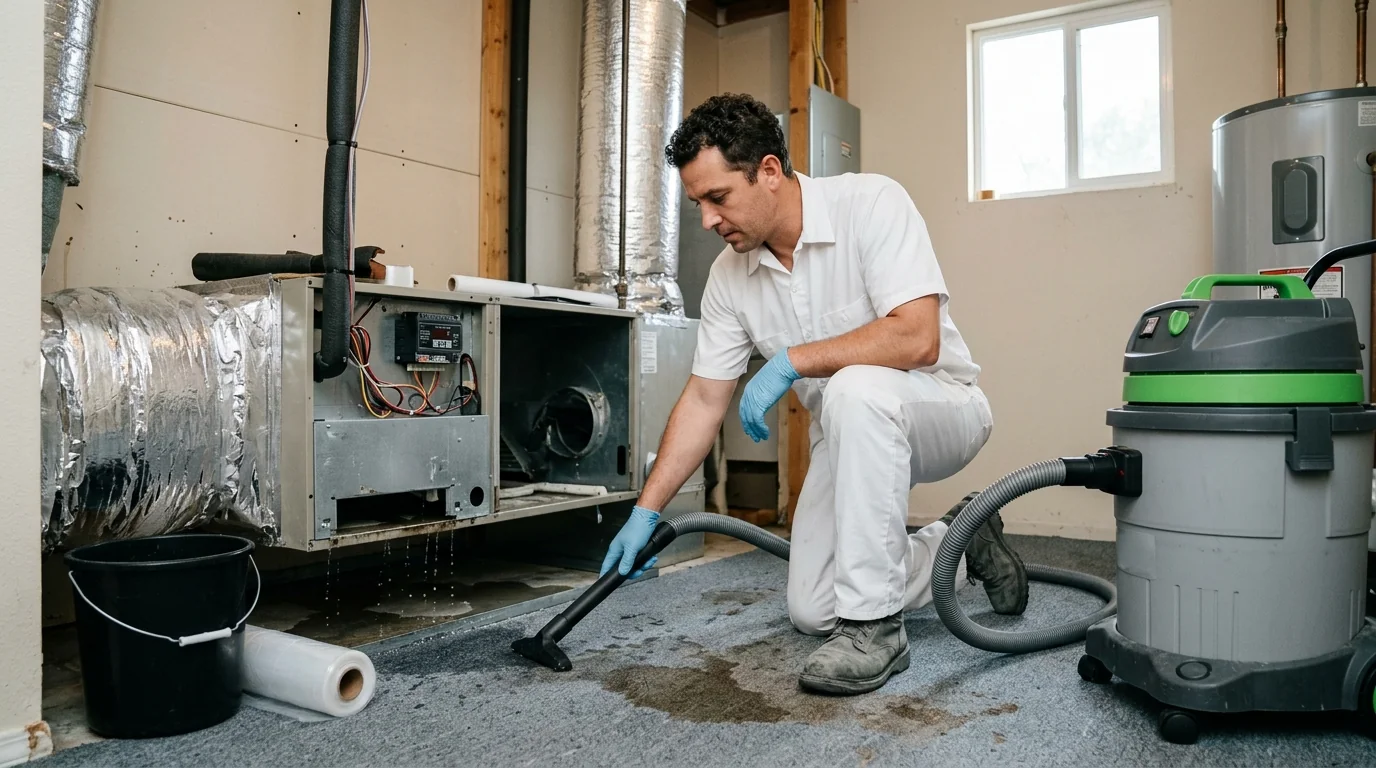
Attic-mounted units are especially problematic — overflow water travels down through ceiling insulation and drywall before it's ever visible, often showing up as a stain on a ceiling far from the unit itself. Closet-mounted air handlers can flood the surrounding flooring and any adjacent walls before a homeowner notices the AC isn't draining properly. If you want to go deeper on this, our guide on HVAC Water Damage Cleanup: Ductwork Contamination and Cleaning covers it well. We also break this down further in HVAC Water Damage in Phoenix: Prevention and Emergency Response.
Extraction Priorities for This Scenario
Because this type of leak is usually slow and ongoing rather than sudden, by the time it's discovered, water has often been accumulating for days or weeks. Extraction crews check not just the visible wet area but trace the path water has likely traveled along ceiling joists or wall cavities from the unit's location. For a related situation, see our post on Drying Drywall vs. Plaster: Why the Wall Material Changes the Timeline. For background from an independent source, see the Department of Energy's HVAC and ventilation guidance.
Preventing Repeat AC Overflow Events

A working float switch that shuts the system off when the overflow pan fills is the best safeguard, along with an annual condensate line flush before peak summer use. If your system doesn't have a float switch installed, it's a relatively low-cost addition that a Phoenix HVAC company can typically install in under an hour. the EPA's mold prevention guidance has useful guidance on this if you want to read further. You can also review the IICRC S500 restoration standard for an outside perspective on this.