Bathrooms are the highest-frequency water damage location in Phoenix residential properties. In a typical Phoenix home, three to four bathrooms each contain multiple water sources — toilet supply lines, sink supply lines, drain connections, shower pan systems, tub surrounds, and fixture connections — that operate daily under pressure.
Toilet-Related Water Damage
Toilet overflows occur in two distinct ways: blockage overflow, where a clogged drain causes bowl overflow during flushing, and supply line failure, where the fill valve or supply hose fails and water overflows the tank or discharges continuously onto the floor. Know the location of the toilet's supply shut-off valve at the base of the fixture — this is the fastest way to stop any toilet-related water damage.
Toilet wax ring failures create a different water damage pattern — a slow, intermittent leak at the base of the toilet that occurs during flushing. This leak may not surface at the toilet base; instead, water travels beneath the toilet flange and appears as staining on the ceiling of the room below or as soft, spongy flooring adjacent to the toilet.
Toilet tank failures — the float valve failing to shut off when the tank is full, causing continuous overflow into the bowl and eventually onto the floor — are less common but can produce significant water damage when the overflow is through the tank's overflow tube onto the floor. Modern dual-flush and water-saving toilets have more complex internal components that can fail in additional ways. the IICRC S500 standard sets the procedural benchmark restoration companies are expected to follow.
Shower, Tub, and Surround Water Damage
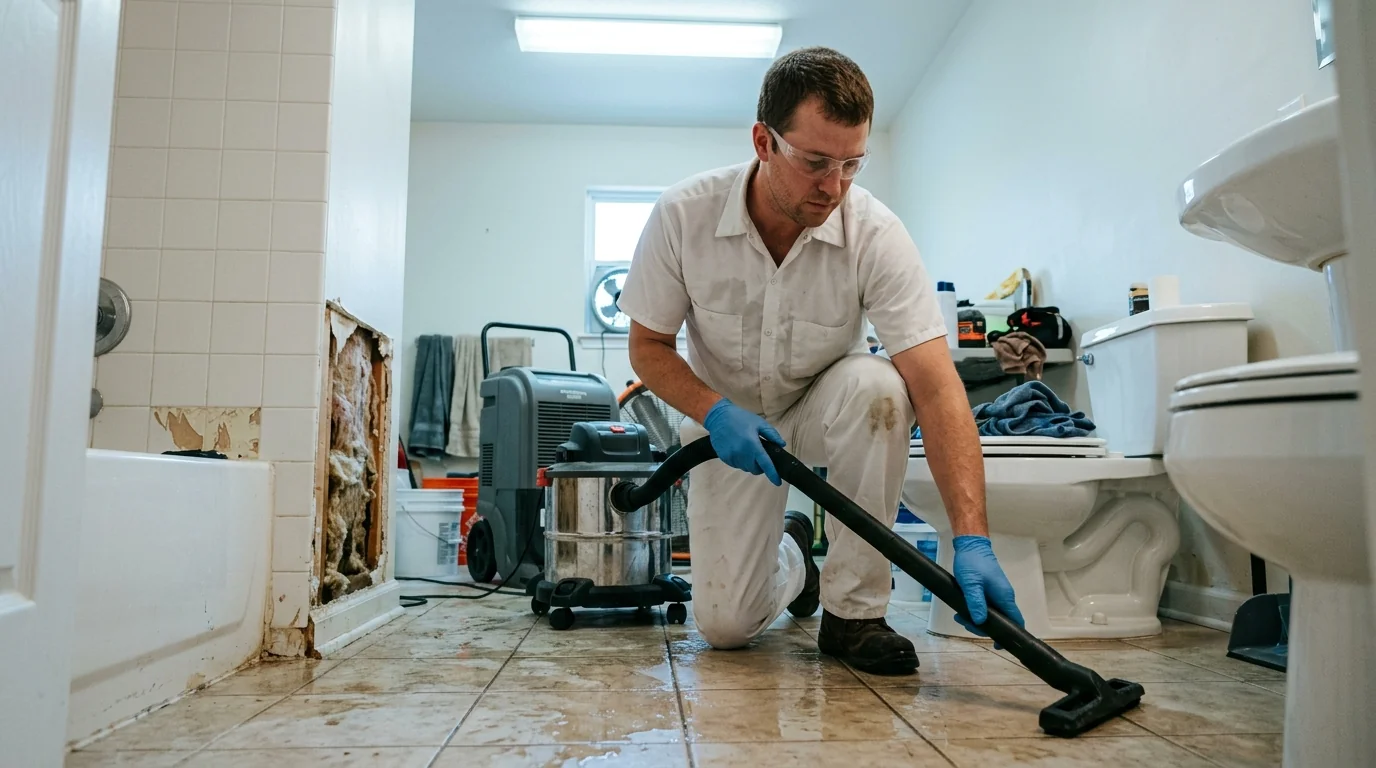
Shower pan failures are a leading hidden water damage source in Phoenix bathrooms, particularly in custom tile showers. The shower pan — whether fiberglass, acrylic, or mud-set tile — must be completely watertight to contain all shower water above the waterline.
Caulking at shower-to-floor and tub-to-wall intersections requires inspection and maintenance every 1-3 years. Phoenix's thermal cycling — from cold winter nights to hot summer days — causes expansion and contraction that eventually separates caulk from the substrate it seals.
Shower mixing valve failures can create hidden water damage within the wall cavity rather than in the shower enclosure itself. A deteriorating shower valve cartridge that develops a slow internal leak discharges water into the wall cavity at the valve location — sometimes without any visible indication in the shower enclosure.
Vanity, Cabinet, and Under-Sink Damage
Under-sink bathroom vanity water damage is primarily caused by supply line failures and drain connection leaks. Bathroom sink supply lines — typically quarter-inch braided hoses — are subject to the same failure profile as all supply hoses: 8-10 year service life, failure at connection points, full household pressure. the EPA provides background on how moisture control prevents mold growth in buildings.
Drain P-trap connection leaks are typically slow events — a slightly loose connection drips only when water runs through the drain. The slow accumulation saturates the cabinet floor over weeks to months.
Vanity countertop water damage occurs when countertop-to-wall caulking has failed, allowing water to penetrate behind the backsplash. Water from hand washing and general humidity accumulates in the gap, saturating the drywall surface behind the backsplash over time.
Professional Bathroom Water Damage Restoration
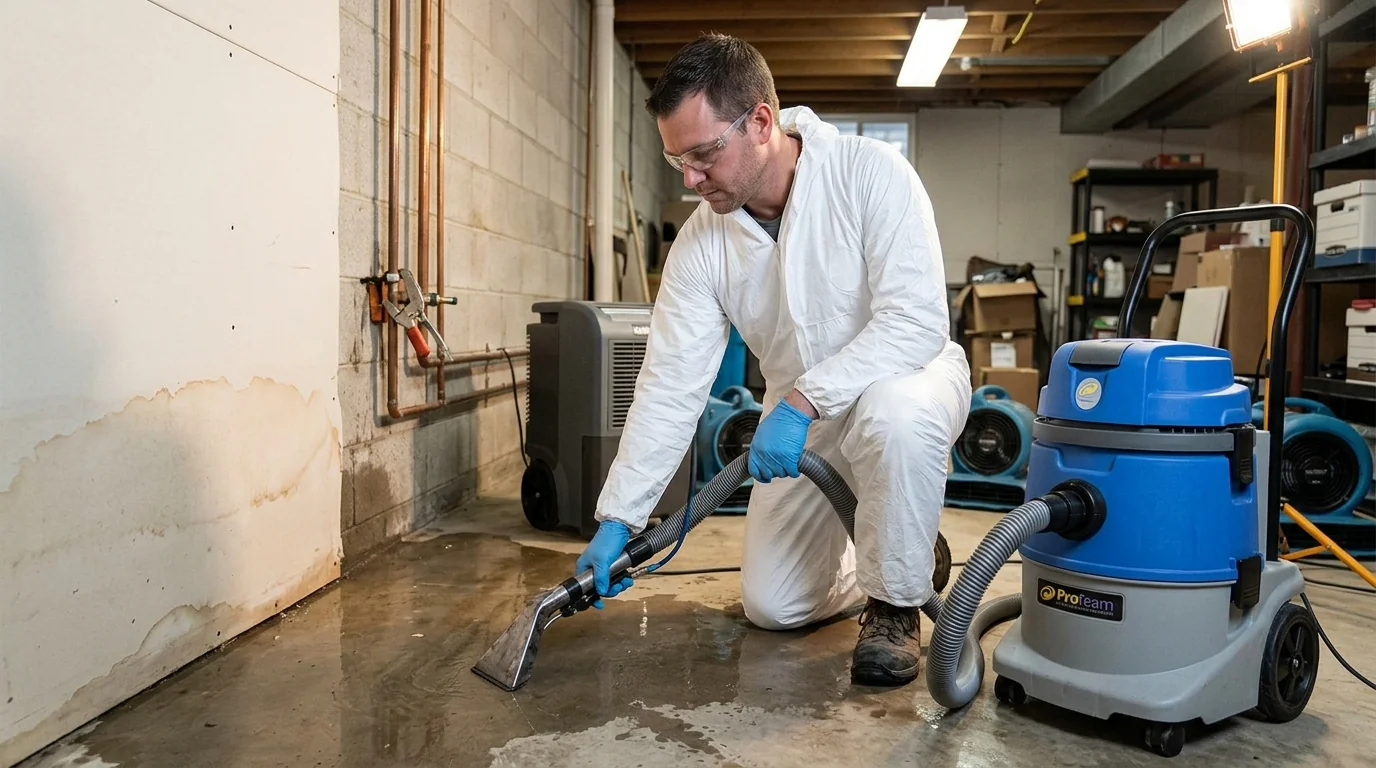
Professional bathroom restoration requires thorough moisture mapping because water travels in multiple directions from multiple sources in the confined bathroom space. Floors, walls, ceiling of the room below, and vanity cabinets all require assessment with thermal imaging and calibrated meters. FEMA's National Flood Insurance Program explains how the National Flood Insurance Program covers flood losses.
Flood cuts in bathroom drywall open the wall cavity for direct assessment and drying of framing. In bathrooms where tile surrounds lower walls, the restoration decision must address whether tile can be removed and reinstalled or whether tile, backer board, and framing must be fully replaced.
Sub-floor drying beneath Phoenix bathrooms — whether concrete slab or plywood over joists — requires extended drying programs. Concrete slab that has been saturated from a bathroom event requires testing for moisture vapor emission rate before any new floor covering adhesive is applied.