Because so much Phoenix construction is slab-on-grade, understanding how structural drying treats concrete is directly relevant to almost every water loss in the metro area. This applies across the Phoenix-area neighborhoods we serve, not just one part of the city.
Why Concrete Dries So Slowly
Concrete is a porous material, but its density means moisture moves through it far more slowly than through drywall or wood framing. Water that penetrates a slab can take considerably longer to release than surface-level moisture, especially in thicker slabs or slabs without an effective vapor barrier beneath them. You can learn more about our Phoenix water damage restoration company and how we help Phoenix homeowners recover quickly.
Surface Moisture vs. Moisture Inside the Slab
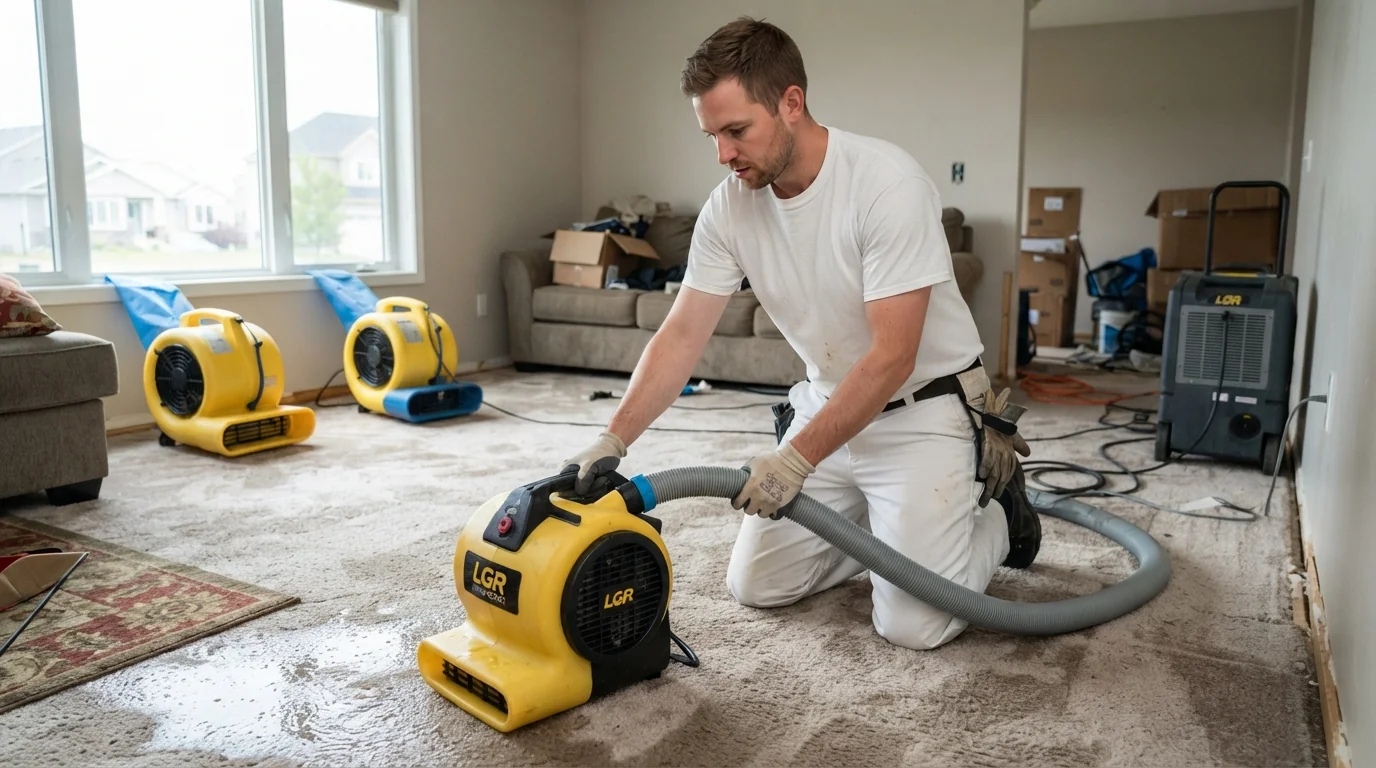
A moisture meter reading the top of a slab measures near-surface conditions, but concrete moisture testing for drying verification often requires deeper methods — calcium chloride tests or in-situ relative humidity probes inserted into the slab itself. Surface readings can look dry while moisture is still migrating upward from deeper in the slab, which is why flooring installers often require a specific test result, not just a moisture meter reading, before installation. If you want to go deeper on this, our guide on Extraction Equipment Noise & Disruption: What to Expect During a Phoenix Restoration Job covers it well.
Why Flooring Type Changes the Required Dryness
Different flooring materials tolerate different levels of residual slab moisture. Tile is fairly forgiving; hardwood and vinyl are considerably less so, and installing moisture-sensitive flooring over an insufficiently dry slab is one of the most common causes of flooring failure months after a water loss appeared resolved. For background from an independent source, see the IICRC S500 restoration standard.
Speeding Up Slab Drying Without Cutting Corners
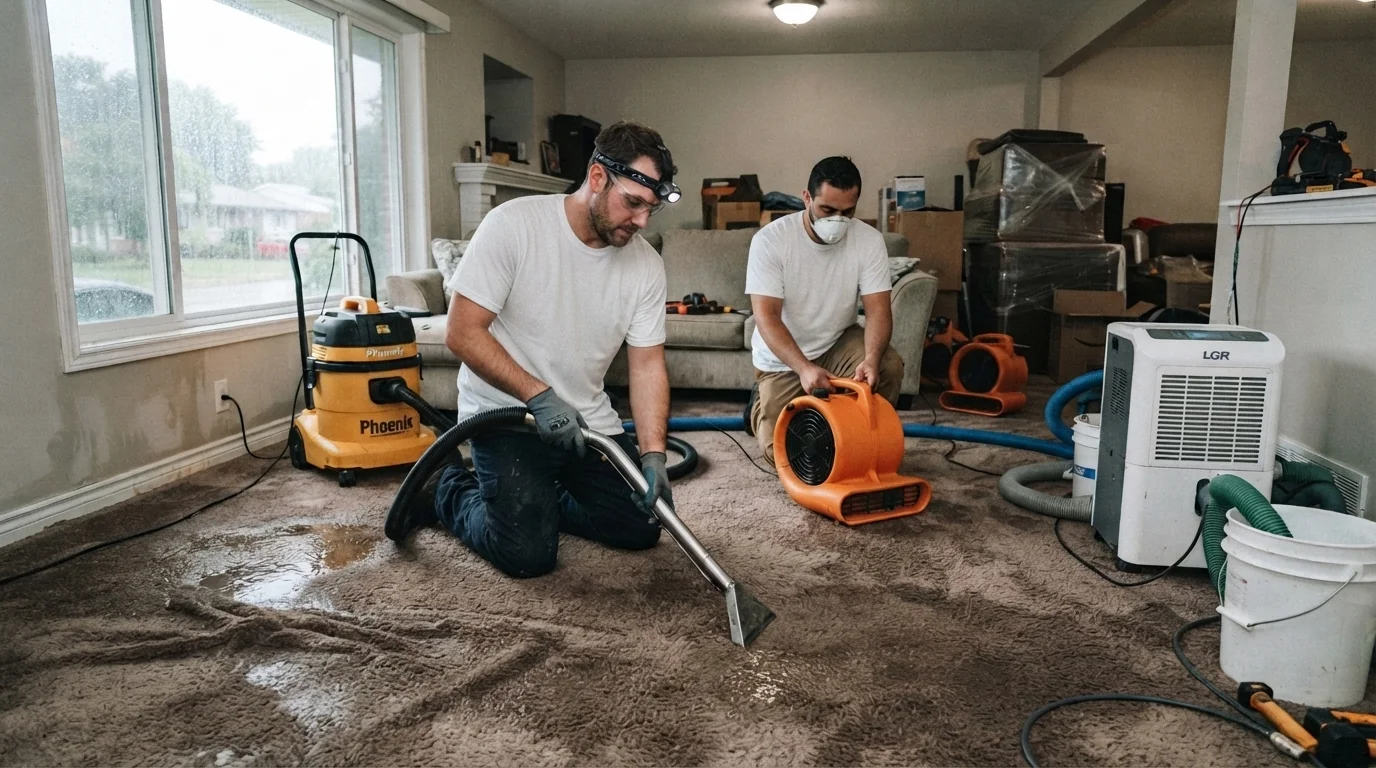
Crews sometimes use specialized slab drying mats similar to those used for tile subfloor drying, applying negative pressure directly to the slab surface to accelerate evaporation. Increasing ambient temperature within the drying chamber also helps, since warmer air holds more moisture and speeds evaporation from the slab surface — but there's a physical limit to how much a thick slab can be accelerated. the EPA's moisture control guidance has useful guidance on this if you want to read further.
Why Rushing Slab Drying Costs More Later
Installing new flooring over a slab that hasn't met the required moisture threshold is one of the most expensive mistakes in the entire restoration process, because it often means removing brand-new flooring months later when moisture-related failures appear. If your restoration or flooring contractor is skipping slab moisture testing before installation, that's worth questioning directly. You can also review the Department of Energy's ventilation and humidity guidance for an outside perspective on this.