Both materials are popular for their look and cost, but each responds to water very differently once structural drying becomes necessary, and treating them the same way is a common mistake. We've answered a lot of related questions on answers to common questions.
Sheet Vinyl and Luxury Vinyl Plank (LVP)
Sheet vinyl is largely waterproof itself but not fully sealed at seams, edges, and around fixtures, which means water can migrate underneath even though the surface material resists water directly. Luxury vinyl plank is similarly water-resistant at the surface but often uses a click-lock installation over an underlayment that can trap moisture between the subfloor and the LVP itself. This applies across the Phoenix-area neighborhoods we serve, not just one part of the city.
Why LVP Sometimes Has to Come Up Anyway
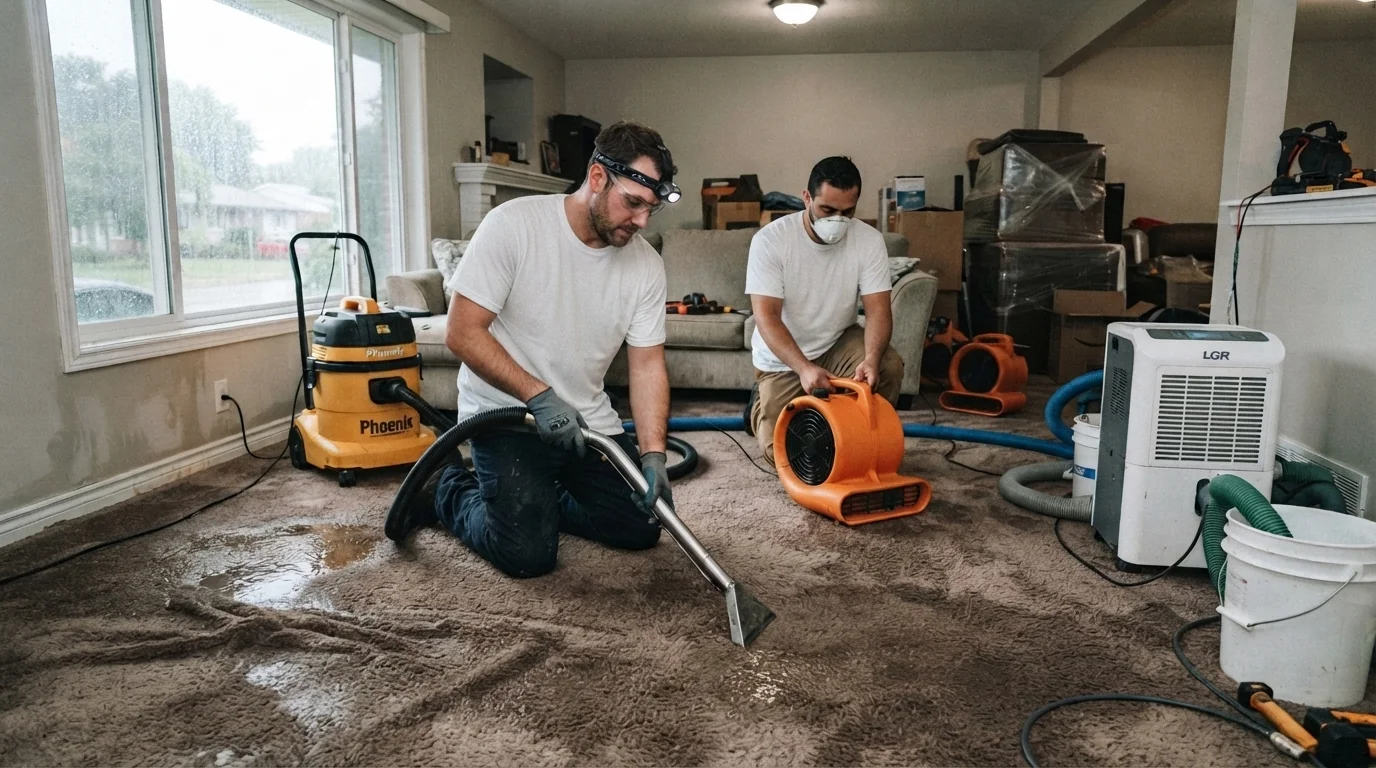
Even though LVP itself often survives water exposure without damage, the underlayment beneath it — frequently a foam or cork material — absorbs and holds moisture, and drying through an intact LVP floor is difficult to verify without removing sections. Many restoration companies will lift a portion of LVP to assess and directly dry the subfloor and underlayment, then reinstall the flooring once target moisture is confirmed. If you want to go deeper on this, our guide on Kitchen Water Damage Repair: Flooring Options After Water Damage covers it well.
Laminate Flooring: The Fiberboard Core Problem
Laminate flooring has a very different vulnerability than vinyl: its core is typically high-density fiberboard, which swells permanently and irreversibly when it absorbs water. Unlike vinyl, laminate generally cannot be dried and reused once water has penetrated the plank edges — swollen laminate almost always requires replacement rather than drying. For background from an independent source, see the IICRC S500 restoration standard.
Identifying Which Situation You're In
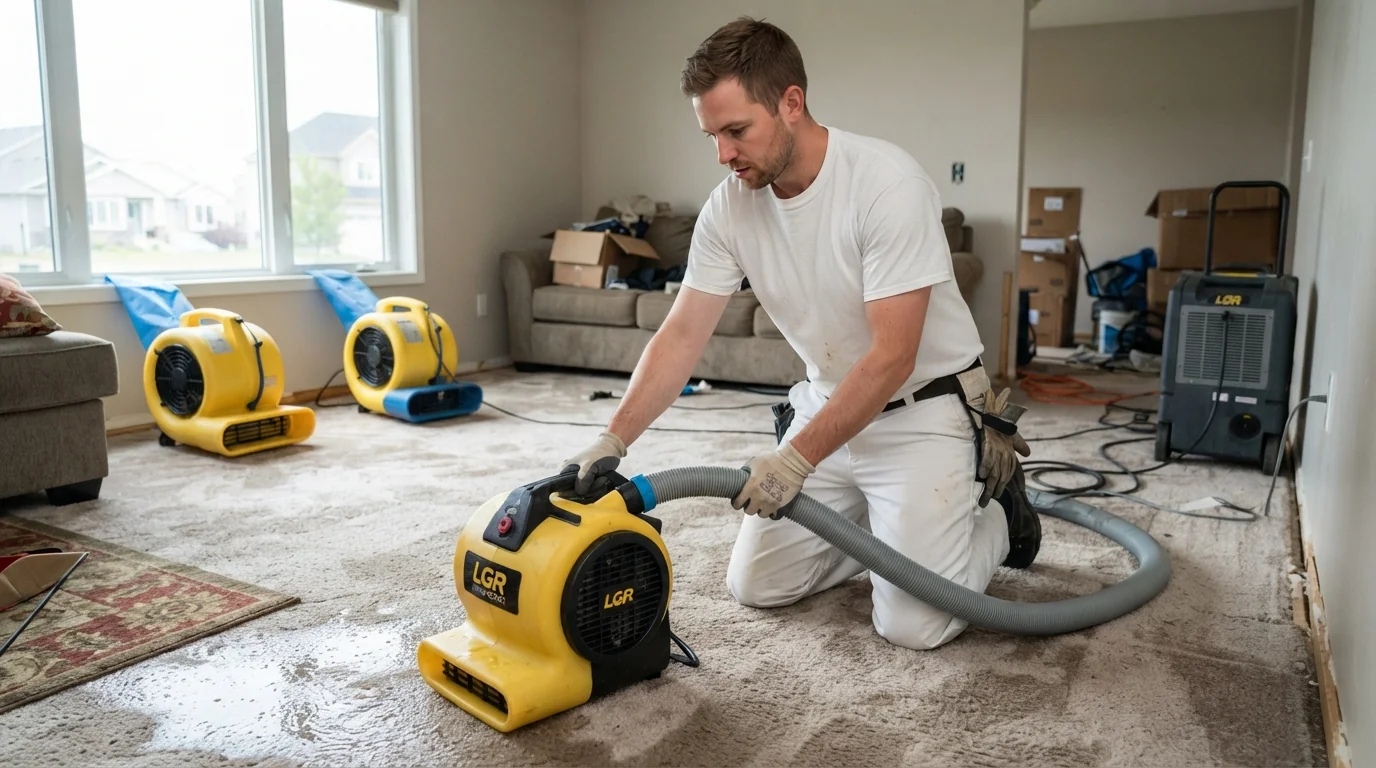
The distinction matters for your restoration plan and your budget: vinyl flooring damage is often a subfloor drying problem with the surface material salvageable, while laminate flooring damage is usually a replacement problem for the surface material itself, similar in outcome to the swollen particleboard scenario in cabinet water damage. the EPA's mold prevention guidance has useful guidance on this if you want to read further.
What This Means for Your Restoration Scope
Ask your restoration technician directly which category your flooring falls into and why, since this affects both the drying plan for materials beneath the floor and whether your restoration estimate should include flooring replacement as a line item from the outset rather than as a surprise later. You can also review the Department of Energy's guidance on humidity and ventilation for an outside perspective on this.