Tile and Stone Flooring
Tile itself is non-porous, so surface water extracts quickly with a standard wand. The real concern is grout lines and the subfloor underneath — water can seep through grout and sit under the tile, which is why moisture meters are used along tile floors even after the visible water is gone. We've answered a lot of related questions on answers to common questions. This applies across the Phoenix-area neighborhoods we serve, not just one part of the city.
Carpet and Padding
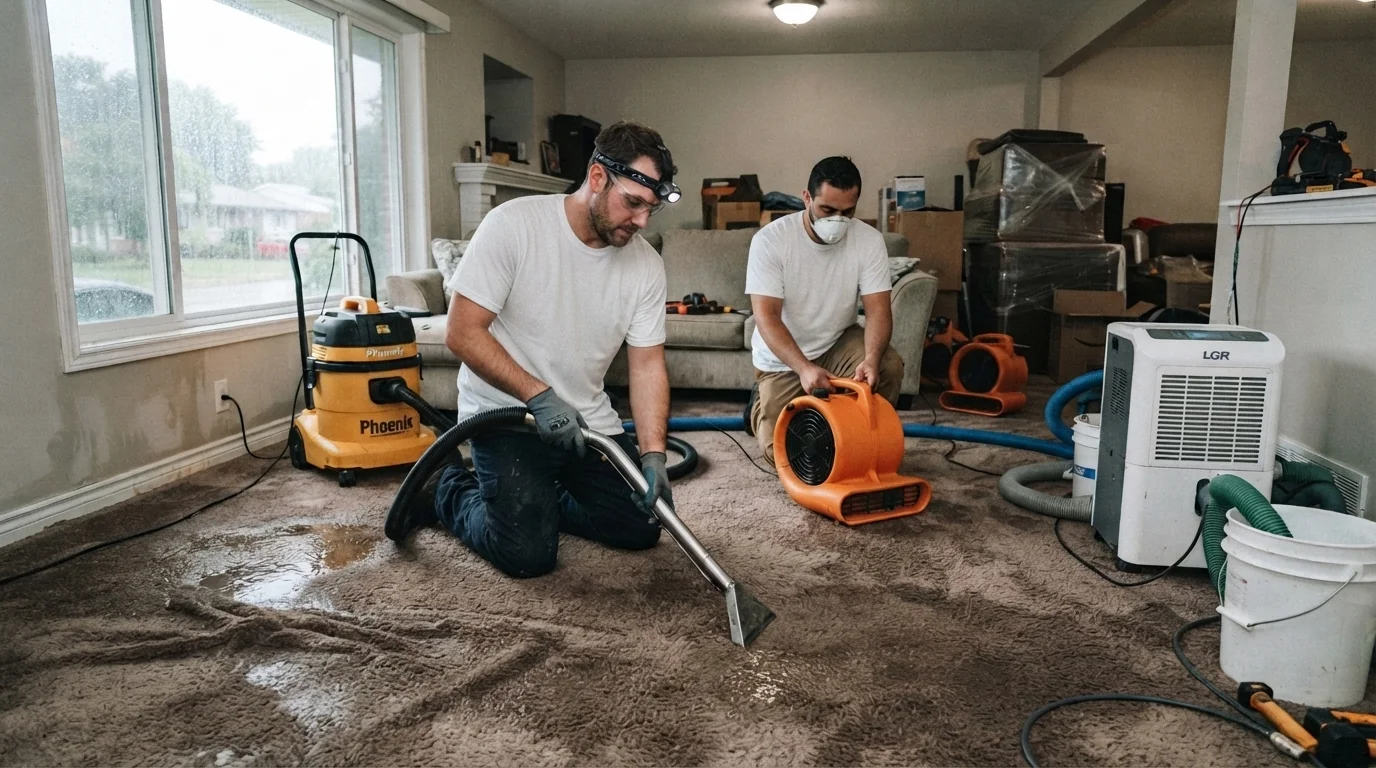
Carpet requires weighted extraction wands that press down while pulling water, since padding underneath holds significantly more water than the visible carpet fiber suggests. In many cases, padding is removed entirely if it's been saturated for more than 24–48 hours, since it rarely dries fully in place. If you want to go deeper on this, our guide on Kitchen Water Damage Repair: Flooring Options After Water Damage covers it well.
Hardwood and Engineered Wood
Hardwood floors are the most sensitive to extraction technique — aggressive wanding can force water further between boards. Crews typically extract surface water gently and rely on specialized drying mats or injection systems to pull moisture from beneath the boards without additional physical disruption. For background from an independent source, see the IICRC S500 restoration standard. the EPA's mold prevention guidance has useful guidance on this if you want to read further.
Laminate and Vinyl Plank
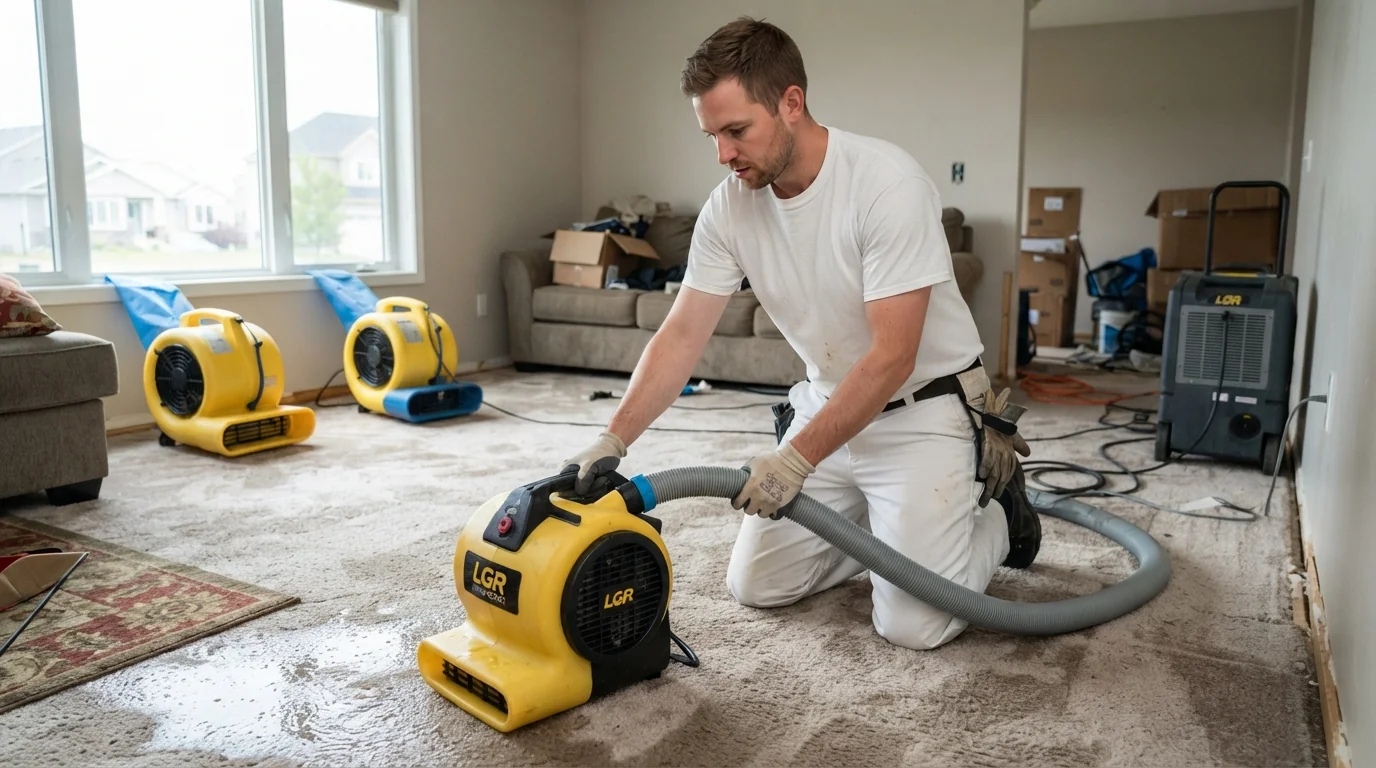
These floating floor types often trap water underneath the planks even when the surface looks dry. Extraction sometimes requires lifting sections of flooring to access trapped water directly, particularly if the water has been present for more than a few hours. You can also review the Department of Energy's guidance on humidity and ventilation for an outside perspective on this.