Roof leak damage rarely announces itself immediately. In most Phoenix homes, the first visible sign is a yellow-brown stain on a ceiling — and by the time that stain appears, water has usually been traveling through the roof assembly for days or weeks. Understanding what a ceiling stain is actually telling you can be the difference between a contained repair and a full ceiling replacement.
Why Stains Appear Long After the Leak Starts
Water entering through a roof penetration or membrane failure does not fall straight down. It travels along the top of the ceiling drywall or along framing members, following the path of least resistance until it finds a low point or a seam to drip through. This means the visible stain is often several feet away from the actual roof failure — sometimes on the opposite side of the room. If cost is on your mind, how our pricing works breaks down what typically drives the number up or down.
The staining itself is caused by tannins and impurities in wood framing and insulation materials leaching into the water as it passes through, then depositing on the drywall surface as the water evaporates. A stain that keeps reappearing after painting over it is a strong signal that the underlying leak was never actually repaired. We've answered a lot of related questions on answers to common questions.
Reading the Shape and Color of the Stain
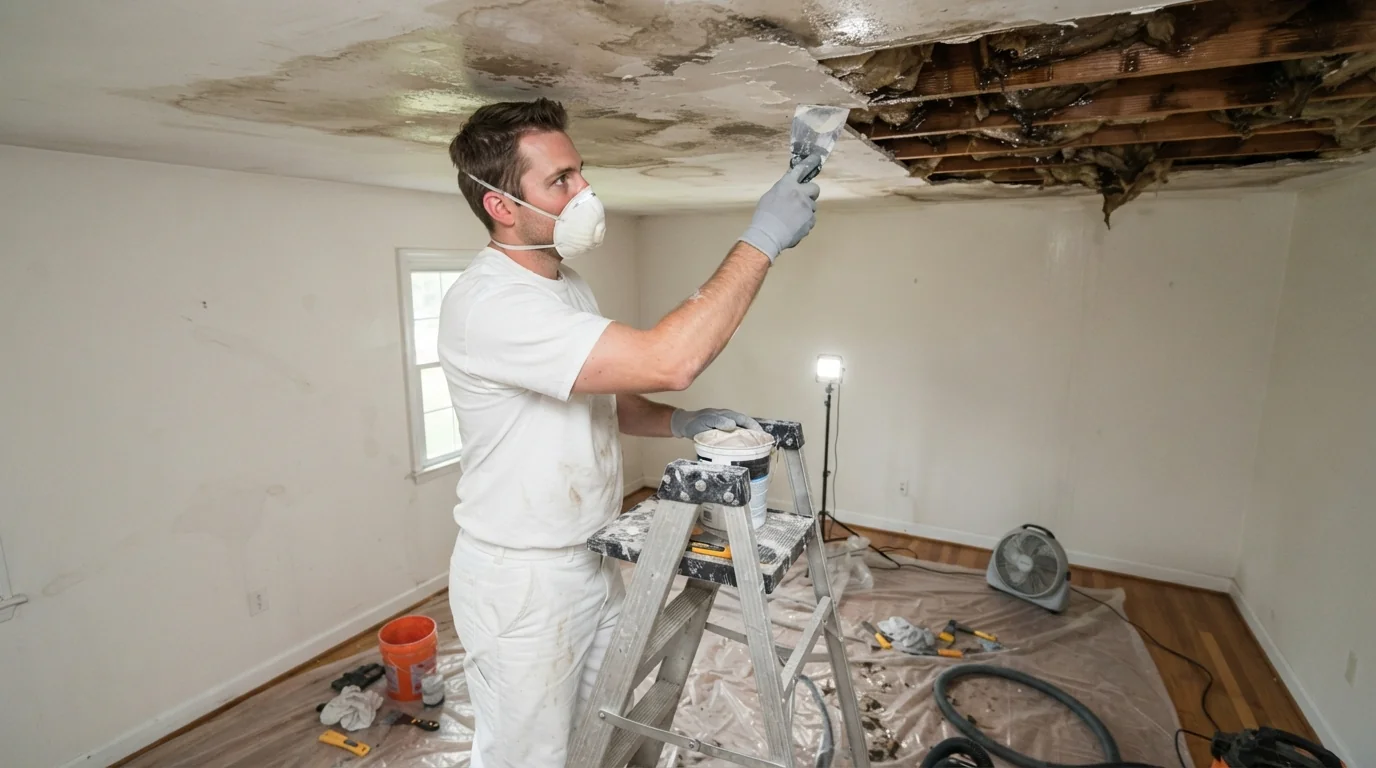
A dark brown ring with a lighter center usually indicates an older, slow leak that has dried and re-wetted multiple times. A fresh yellow stain with soft, spreading edges often indicates active or very recent water intrusion. Sagging or bubbling drywall around the stain means the paper facing has already delaminated from moisture saturation — a sign that the drywall itself likely needs replacement, not just a repaint. For background from an independent source, see the EPA's guidance on moisture and mold.
Black or dark green discoloration mixed into the stain pattern can indicate mold growth has already started within the ceiling cavity, which changes the scope of the necessary repair from a simple patch to a remediation project. Mold remediation becomes necessary once organic growth is confirmed or suspected.
What Professional Assessment Actually Involves
A proper assessment does not stop at the visible stain. Technicians use thermal imaging cameras to trace the moisture pathway back toward its likely source, and moisture meters to confirm which materials are actually wet versus simply stained from a past event. This distinction matters enormously for scope and cost — a dry, stained ceiling may only need cosmetic repair, while a wet ceiling assembly needs full drying and possible material replacement. the IICRC S500 restoration standard has useful guidance on this if you want to read further.
Roof access is coordinated separately from interior assessment, since the actual point of water entry on the roof surface must be identified and temporarily sealed before interior repairs make sense. Repairing ceiling drywall without first stopping the source leak simply invites the stain to return. You can also review the Insurance Information Institute's claims overview for an outside perspective on this.
When to Call Immediately vs. Schedule an Inspection

An actively dripping stain, a stain that has appeared within the last 24 hours following a storm, or any stain accompanied by a musty odor warrants an immediate call. A long-standing, dry, non-growing stain can typically be scheduled for a standard inspection rather than emergency dispatch — but it should never be ignored indefinitely, since Phoenix's extreme attic heat accelerates mold growth once moisture is present.