Step One: Stopping the Water Source
Burst pipe repair always starts with stopping the flow of water at its source, either by shutting off the main water supply or isolating the affected line if your plumbing layout allows it. This step falls to a licensed plumber if the failure is at a fitting or section that requires cutting and capping before restoration work can safely begin. Read more about our team and certifications if you want to know who will be showing up at your door. If a situation like this is happening right now, you can request emergency service and we'll get moving.
Only after the water source is controlled does the restoration side of the repair — extraction and drying — begin in earnest. If you want to go deeper on this, our guide on Slab Leaks and Water Damage in Phoenix Homes covers it well.
Step Two: Water Extraction and Damage Assessment
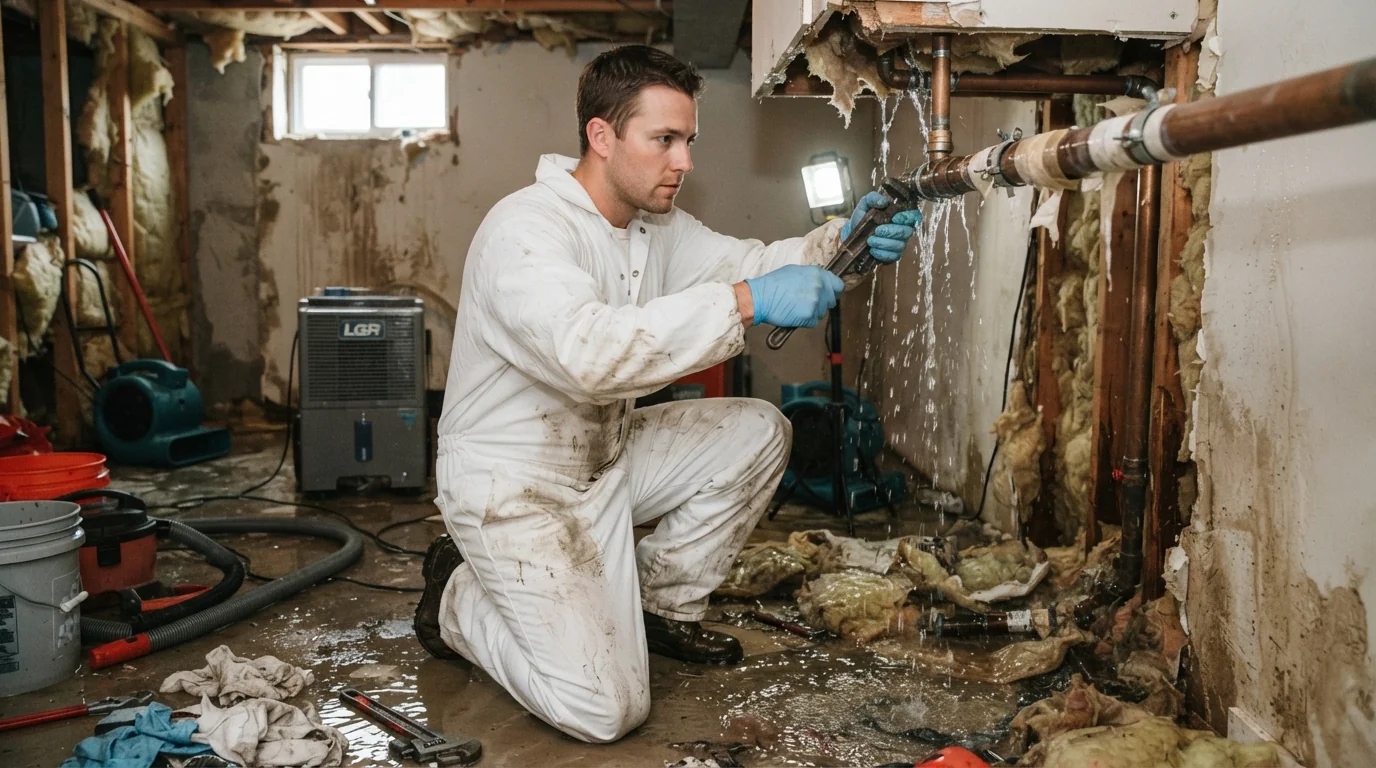
Once the leak is stopped, technicians extract standing water and use moisture meters and thermal imaging to map exactly how far the water traveled, since burst pipe water frequently spreads well beyond the room where the failure occurred, especially when it runs along a slab or between floors. We also break this down further in Burst Pipe Repair for Slab Leaks in Phoenix Homes.
This assessment determines the full scope of the repair — which walls, floors, and cabinetry were affected — and is documented for the insurance claim. For background from an independent source, see the IICRC S500 restoration standard.
Step Three: Structural Drying
Air movers and dehumidifiers are positioned according to the mapped extent of the water intrusion, and drying typically continues for three to seven days depending on how much material absorbed water and how deep it penetrated. Materials that can't be dried in place, such as saturated drywall or particleboard cabinetry, are removed during this phase. FEMA's National Flood Insurance Program has useful guidance on this if you want to read further.
Step Four: Plumbing Repair and Reconstruction
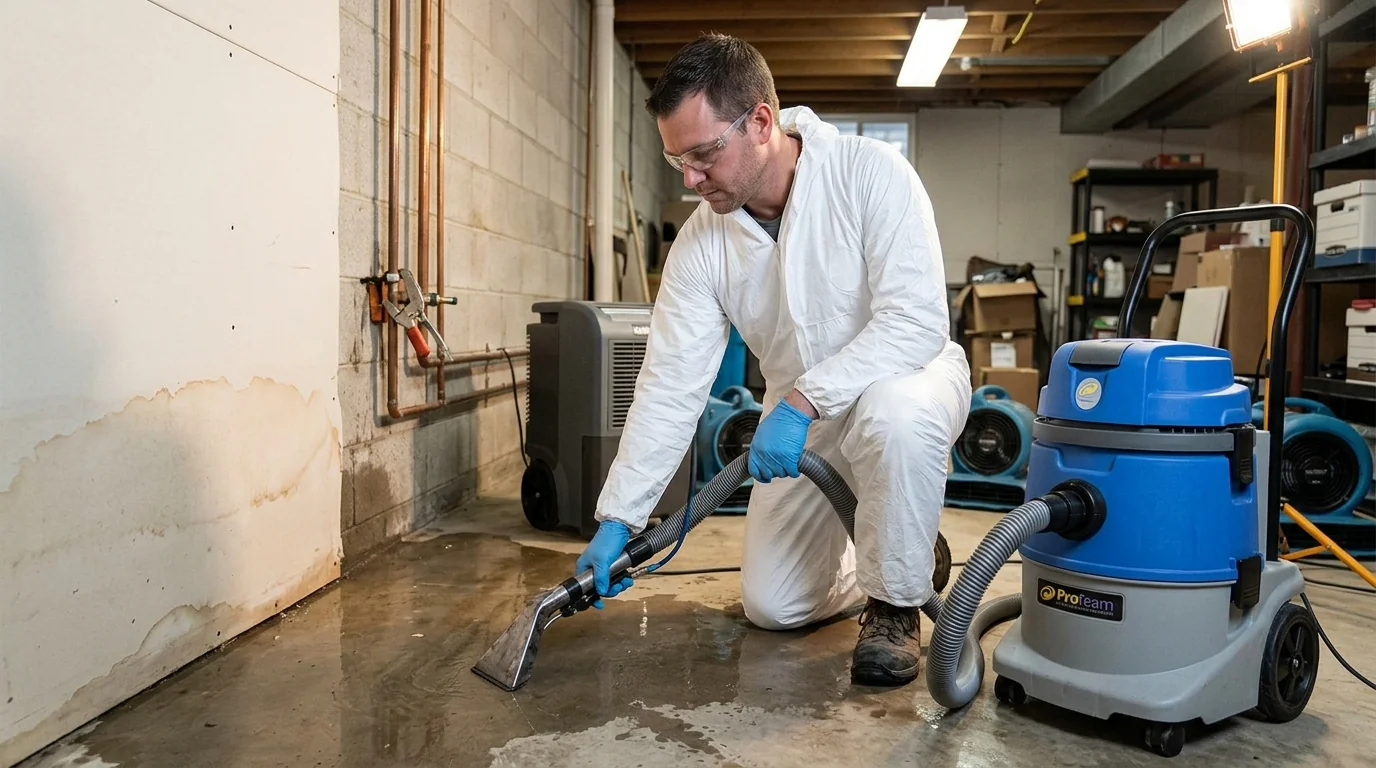
With the affected area dried, the plumbing itself is permanently repaired or replaced by a licensed plumber if it wasn't already completed at the start of the process. Reconstruction — new drywall, flooring, paint, and any cabinetry — follows once the plumbing repair is verified and the structure has passed final moisture checks. You can also review the Insurance Information Institute's overview of water damage claims for an outside perspective on this.