The Typical Drying Window
Most carpet drying projects in Phoenix take between two and four days with professional extraction and drying equipment running continuously. This window assumes the water was clean, extraction happened promptly, and the carpet and padding weren't saturated for an extended period before the drying process began. It's worth browsing our full list of restoration services to see which one matches what you're dealing with. If cost is on your mind, how our pricing works breaks down what typically drives the number up or down.
Factors That Extend the Timeline
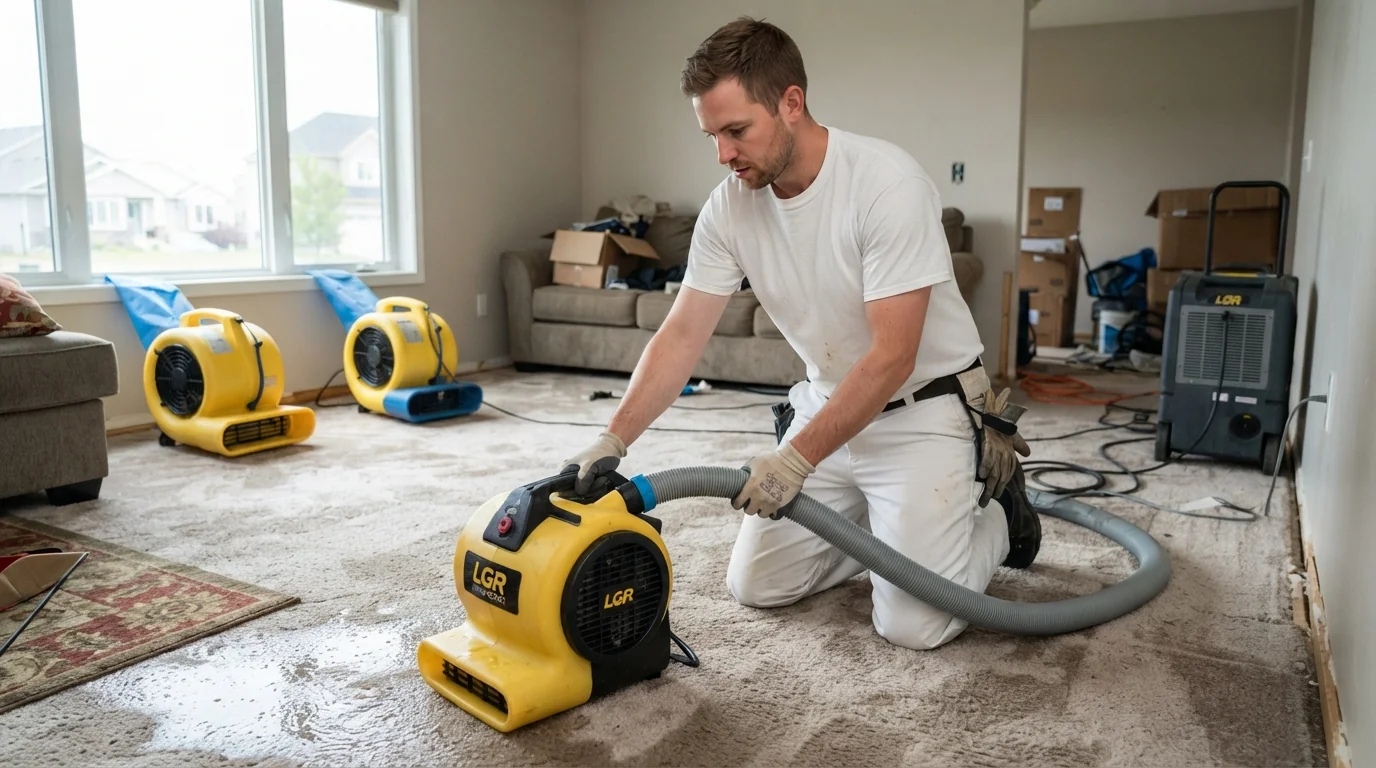
Heavier saturation from standing water that sat for many hours or days before extraction takes longer to dry than a fresh, shallow water event. Contaminated water often requires additional steps, including antimicrobial treatment and, frequently, padding replacement, which can add time compared to a straightforward clean-water drying process. If you want to go deeper on this, our guide on Carpet Drying: When Padding Must Be Replaced vs Saved covers it well.
Concrete subfloors, common in Phoenix construction, can also extend drying time since concrete releases absorbed moisture more slowly than wood subfloor. We also break this down further in Hardwood Floor Drying After Water Damage in Phoenix. For background from an independent source, see the IICRC S500 restoration standard.
Phoenix's Climate as a Drying Advantage
Phoenix's naturally low ambient humidity is an advantage for carpet drying compared to more humid regions, since the air has a greater capacity to absorb moisture during the evaporation process. See our related guide on the desert climate drying advantage for more detail on how this helps speed up restoration generally. the EPA's mold prevention guidance has useful guidance on this if you want to read further.
Signs Drying Is Taking Longer Than Expected
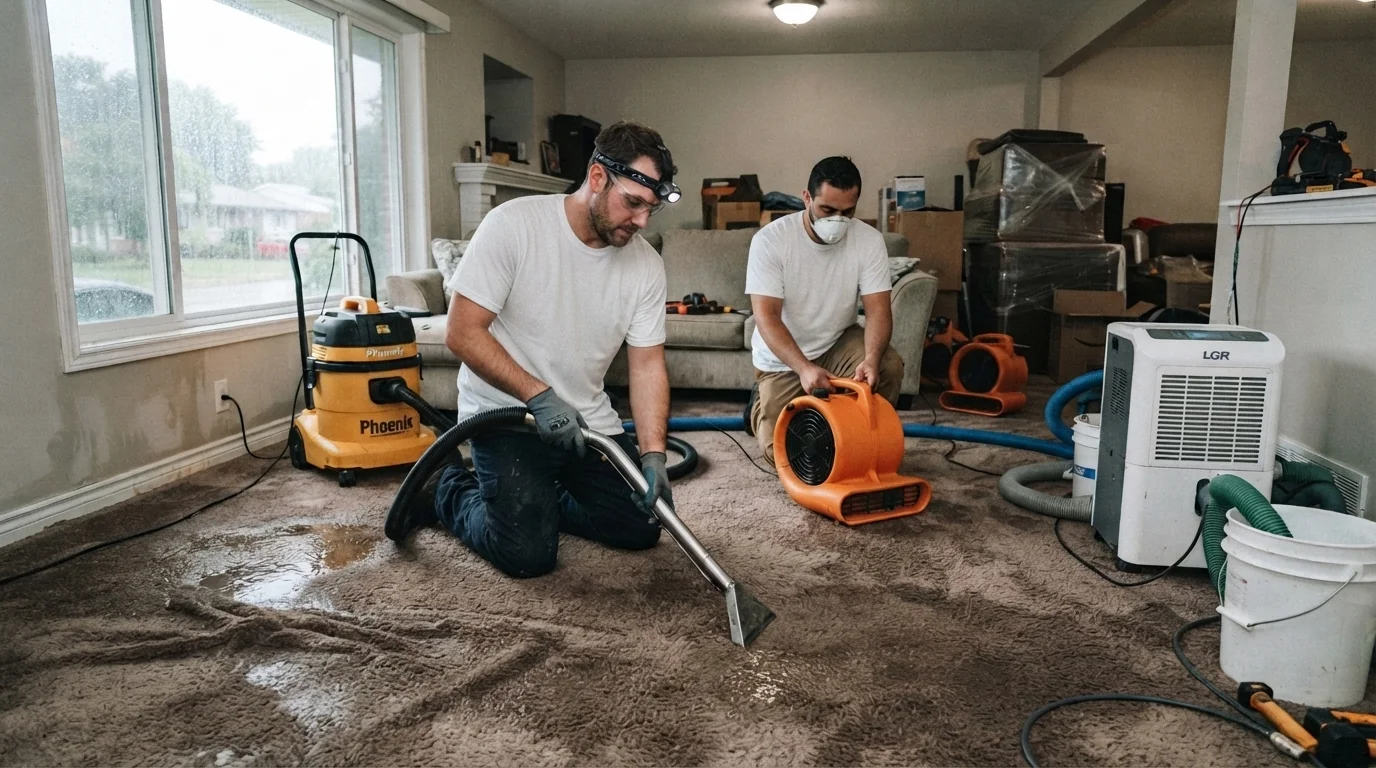
If moisture readings aren't showing meaningful improvement after several days of equipment running, it can indicate a larger water source than initially assessed, water trapped beneath the carpet that isn't being reached effectively, or equipment placement that needs adjustment. A good restoration crew monitors and adapts rather than running equipment on a fixed schedule regardless of progress. You can also review the Department of Energy's guidance on humidity and ventilation for an outside perspective on this.