Carpet is one of the most water-absorbent flooring materials in a Phoenix home — and one of the least forgiving when wet. A carpet and pad system can retain multiple gallons of water per square foot in the pad and sub-floor interface where it creates ideal mold conditions while the surface feels nearly dry within hours.
Assessment: Can the Carpet Be Saved?
The salvageability decision for water-damaged carpet depends on four factors: water category, time elapsed, carpet type, and condition. Category 1 clean water events professionally extracted within 24 hours offer the best candidate profile for carpet restoration. If cost is on your mind, how our pricing works breaks down what typically drives the number up or down.
Carpet pad is virtually always replaced in any significant water damage event, regardless of the carpet decision. Carpet pad is open-cell foam that absorbs and retains water at its core even after the surface appears dry.
Pattern and seam location are practical restoration considerations. If the affected area is a portion of a larger room where the carpet has a pattern that cannot be matched for partial replacement, full room replacement may be the more appropriate aesthetic solution than restoration and patching. the IICRC S500 standard sets the procedural benchmark restoration companies are expected to follow.
Professional Carpet Water Extraction
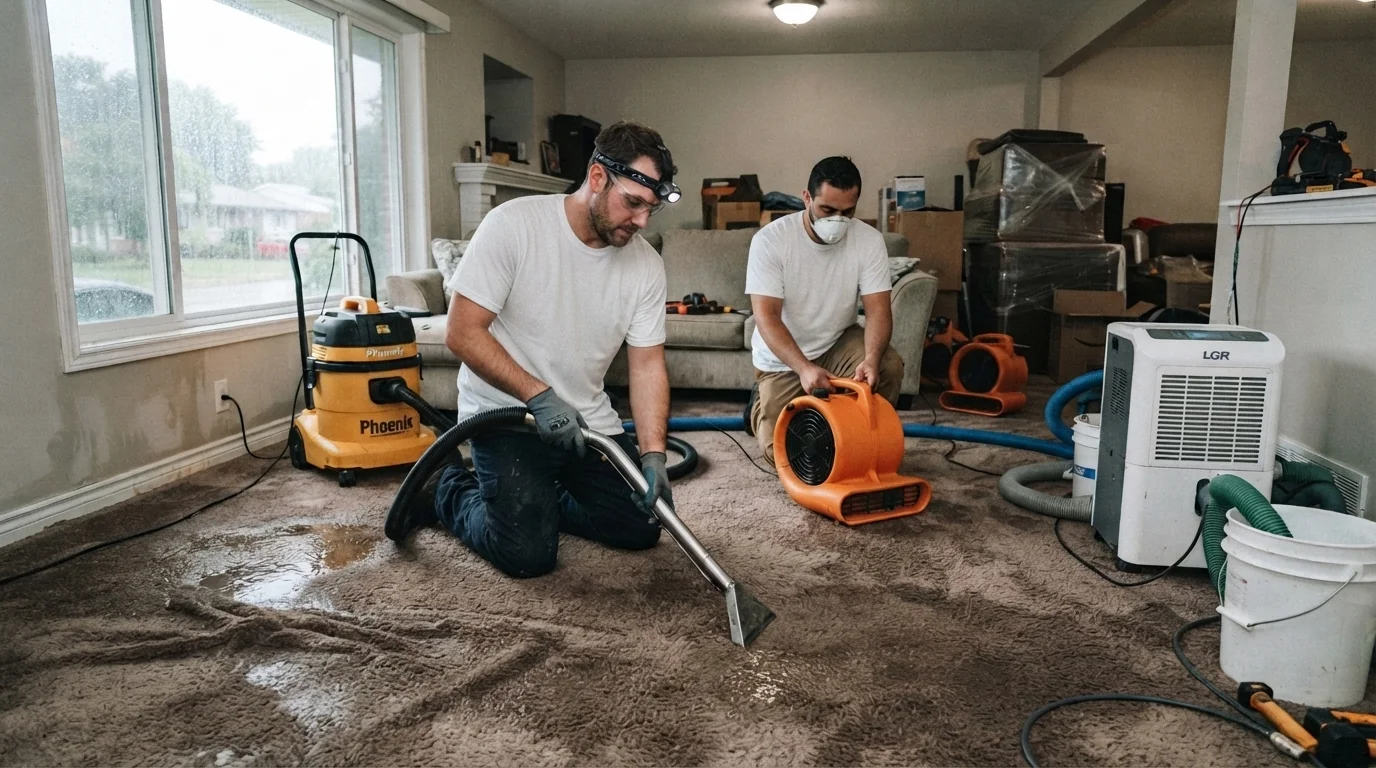
Professional carpet water extraction uses weighted extraction tools that apply downward pressure while simultaneously suctioning water from the carpet pile and backing. The downward pressure compresses the carpet against the pad, forcing water toward the suction head more effectively than floating extraction.
After carpet extraction, the carpet may be lifted and folded back to expose the pad and sub-floor for separate assessment and treatment. The pad is inspected for condition and contamination, then removed and replaced.
Sub-floor extraction uses specialty attachments designed for the floor construction type beneath the carpet. In Phoenix homes with concrete slab sub-floors beneath carpet (the most common configuration in single-story construction), the concrete surface is assessed for saturation and any moisture beneath wood sleeper systems is addressed.
Drying, Deodorizing, and Antimicrobial Treatment
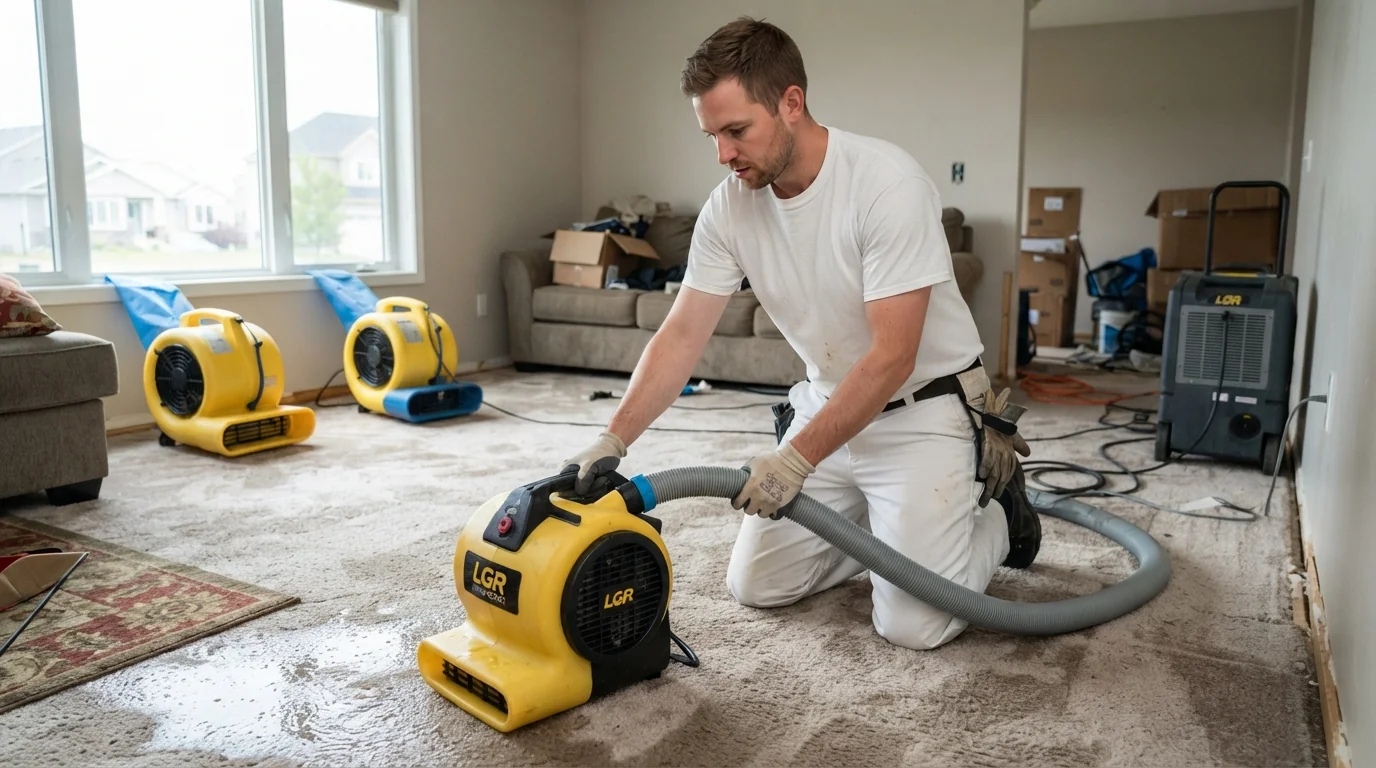
Carpet structural drying positions air movers at low angles to create horizontal airflow across the carpet surface, maximizing evaporation from the carpet pile. If the carpet has been lifted and the pad removed, air movers are directed at low angles under the carpet float. the EPA provides background on how moisture control prevents mold growth in buildings.
Carpet odor is one of the most persistent quality concerns in water damage restoration and requires specific treatment beyond drying alone. Wet carpet odor is caused by biological activity of bacteria and mold in wet fibers combined with release of compounds from water-damaged backing materials.
Antimicrobial treatment is applied to the sub-floor and any exposed framing before the carpet is relaid. For restorable carpet, an antimicrobial agent appropriate for carpet fibers is applied to the backing before reinstallation over the new pad.
When to Replace vs Restore
Clear replacement situations: any carpet in contact with Category 3 water must be replaced — it cannot be effectively decontaminated. Carpet with visible mold growth requires replacement. FEMA's National Flood Insurance Program explains how the National Flood Insurance Program covers flood losses.
Restorable situations: Category 1 clean water events addressed within 24 hours with clean water and carpet in good pre-loss condition have good restoration potential. Berber and loop-pile carpets restore better than cut-pile because their construction retains less moisture in the pile and dries more uniformly.
For insurance documentation of carpet decisions, get the adjuster's agreement on the restoration versus replacement approach before work proceeds. If the adjuster favors restoration and the restoration company recommends replacement based on contamination or condition, document the technical basis for the recommendation clearly.