Why Rooftop Units Face Different Water Damage Risks
Many Phoenix commercial and retail properties use rooftop package units rather than a split system with an indoor air handler, which changes where water damage risk concentrates. These units are directly exposed to monsoon rain, and a failed roof curb seal or clogged condensate drain can send water down through the roof penetration and into the ceiling below rather than affecting an indoor closet or attic unit. If a situation like this is happening right now, you can request emergency service and we'll get moving. It's worth browsing our full list of restoration services to see which one matches what you're dealing with.
Common Failure Points on Rooftop Units
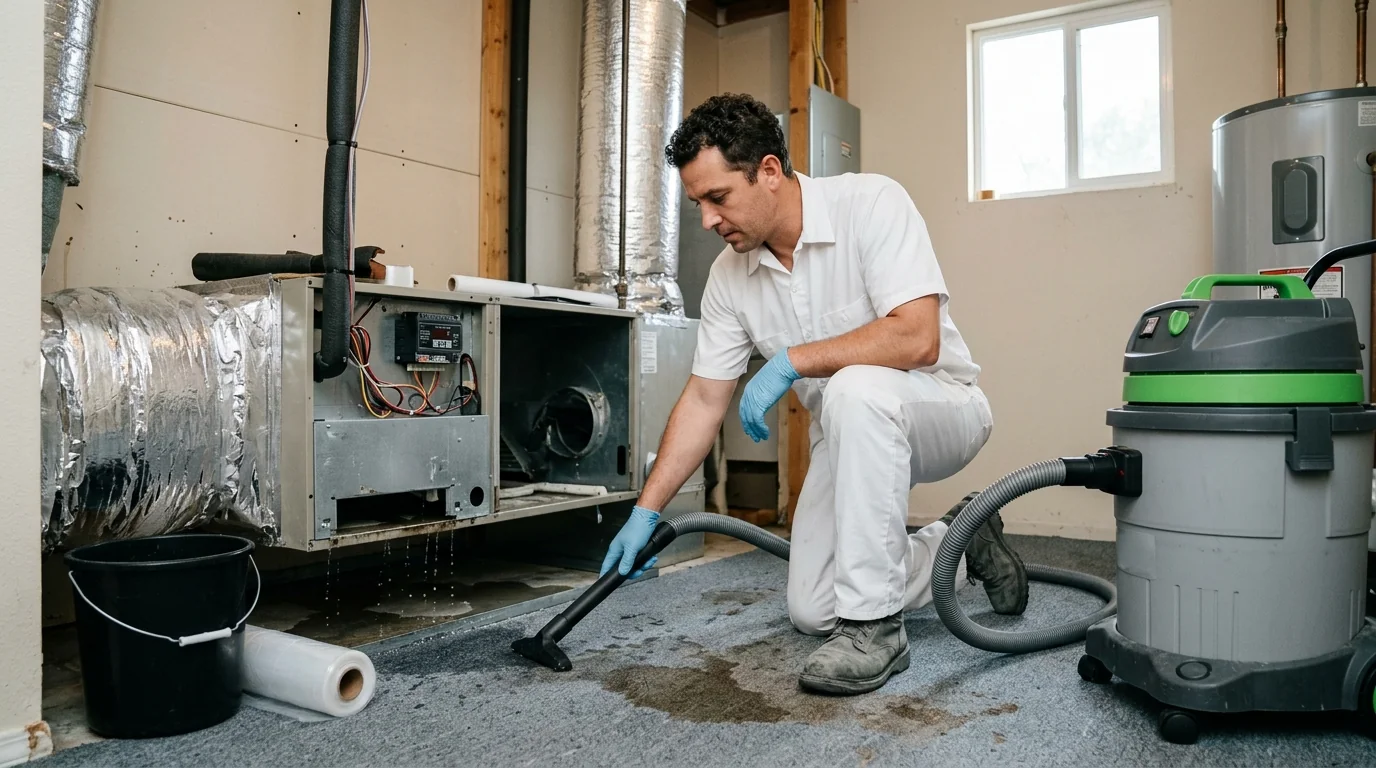
The roof curb — the raised platform the unit sits on — and its flashing are common points of water intrusion if the seal degrades over time, a particular concern given Phoenix's UV exposure and temperature extremes. Condensate drain lines that become clogged with debris can also cause water to back up and overflow inside the unit's cabinet rather than draining properly off the roof. If you want to go deeper on this, our guide on Why Does My Roof Keep Leaking in the Same Spot? Phoenix Homeowners' Guide covers it well. We also break this down further in Flood Vents and Flood Proofing for Phoenix Properties.
Assessing Damage Below the Roofline
Because rooftop units sit above the building, water intrusion from a failed unit often shows up first as ceiling staining or a leak inside the space below, similar to a general flat roof leak. A thorough HVAC water damage cleanup for a rooftop unit issue includes assessing the ceiling assembly, insulation, and any interior finishes below the unit, not just the equipment itself. For background from an independent source, see the EPA's guidance on moisture and mold. the IICRC S500 restoration standard has useful guidance on this if you want to read further.
Restoring Ceiling and Interior Damage
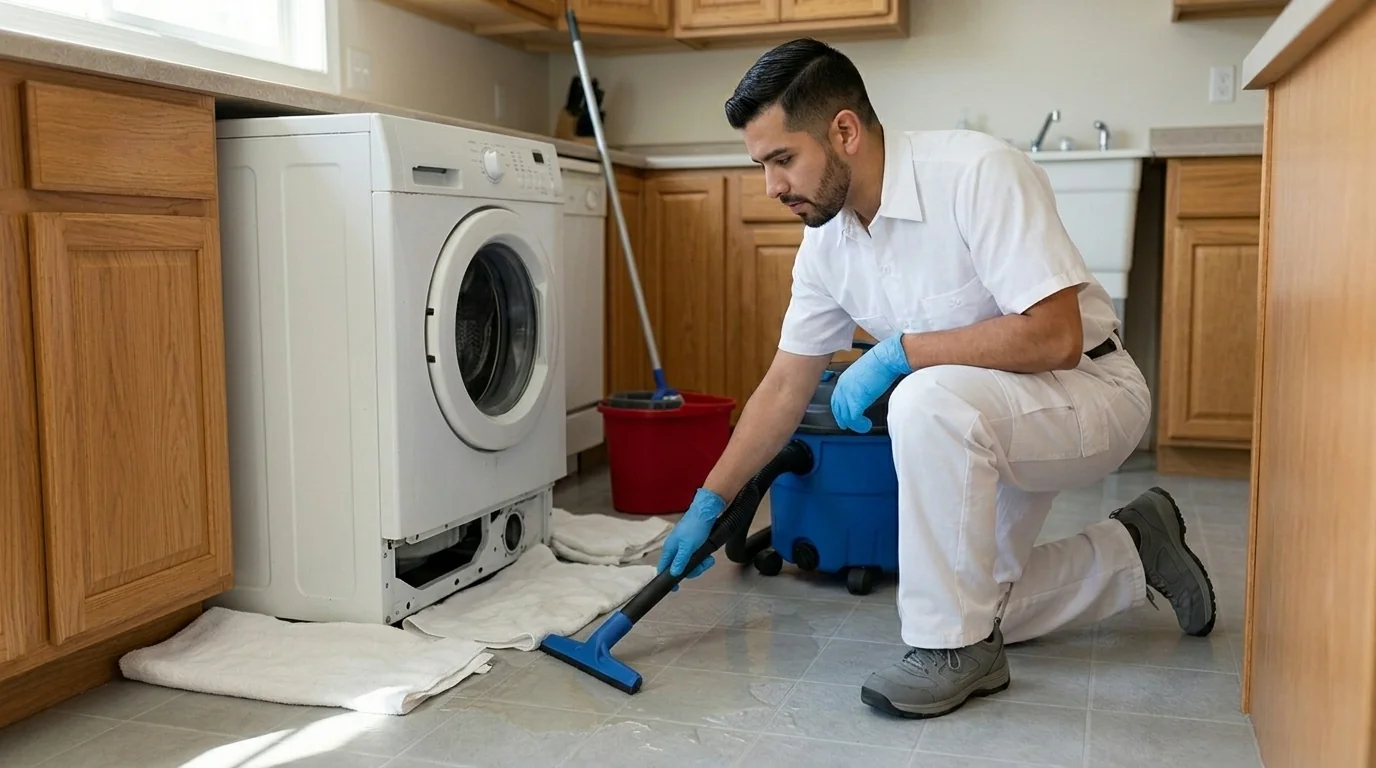
Once the rooftop unit or its seal is repaired to stop the source, restoration proceeds much like any interior water damage cleanup — extracting standing water, drying affected ceiling tiles, insulation, and framing, and replacing materials that couldn't be dried in place. For commercial properties, coordinating the roofing repair and interior restoration timelines helps avoid re-damage from continued leaks during the repair process. You can also review the Insurance Information Institute's claims overview for an outside perspective on this.