Why Storage Facilities Present a Unique Challenge
Unlike a typical commercial extraction job, the contents inside a flooded storage unit belong to individual tenants who may not even know there's a problem yet. Facility management usually needs to notify affected tenants promptly so they can assess or remove belongings, in parallel with the extraction work itself. We've answered a lot of related questions on answers to common questions. This applies across the Phoenix-area neighborhoods we serve, not just one part of the city.
Common Causes in Storage Facilities
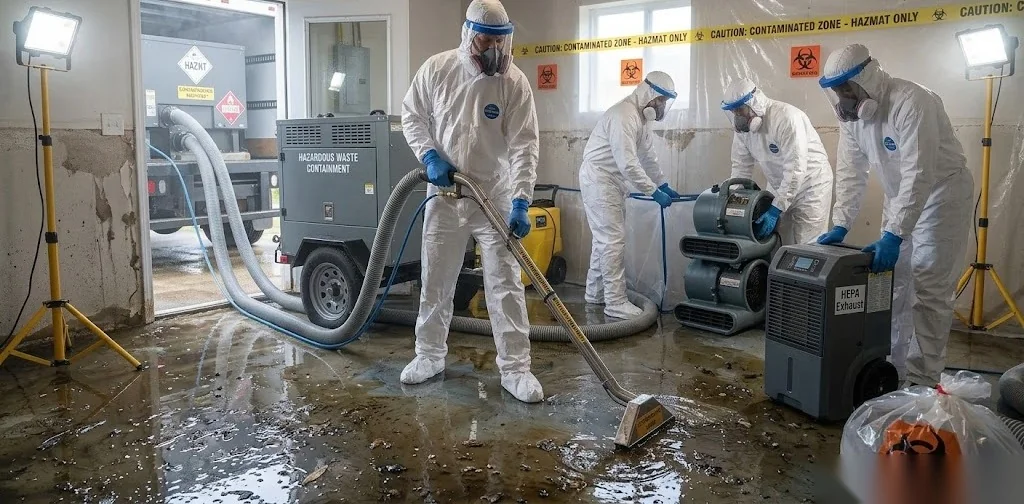
Roof leaks are the most frequent source we see, particularly in older metal-roofed facilities common across the Phoenix metro, along with unit-to-unit water migration when one unit's leak affects adjoining units sharing a wall or floor. If you want to go deeper on this, our guide on Water Damage in Arizona Rentals: Landlord and Tenant Rights covers it well. We also break this down further in Warehouse & Industrial Water Extraction: Large-Scale Response in Phoenix.
Extraction Around Stored Property
Crews work carefully around tenant belongings rather than moving through a unit as freely as an empty commercial space — cardboard boxes, furniture, and paper goods are all assumed to be at risk of quick water damage and are flagged for tenant attention rather than handled unilaterally. For a related situation, see our post on Office Water Damage in Phoenix: Fast Response to Protect Business and Data. For background from an independent source, see OSHA's workplace safety guidance.
Facility Liability and Documentation
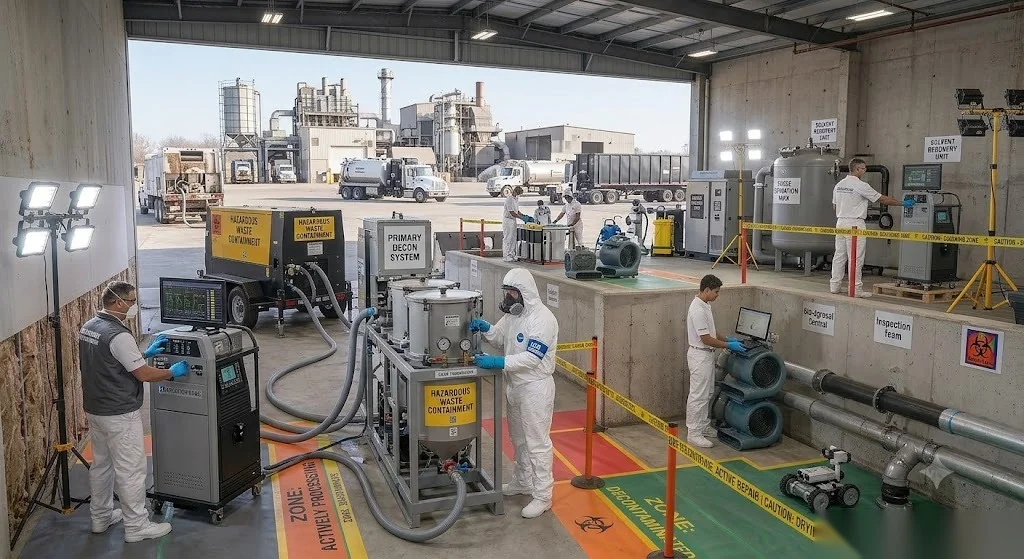
Thorough documentation of which units were affected, to what extent, and when the facility discovered the issue is critical both for the facility's own insurance claim and to address tenant liability questions accurately. the IICRC S500 restoration standard has useful guidance on this if you want to read further. You can also review the Insurance Information Institute's business claims overview for an outside perspective on this.