Scale Changes the Equipment Needed
A warehouse flood involving thousands of square feet requires multiple truck-mounted extractors working simultaneously rather than a single unit, plus submersible pumps for any low-lying loading dock areas where water naturally collects. Read more about our team and certifications if you want to know who will be showing up at your door. If a situation like this is happening right now, you can request emergency service and we'll get moving.
Protecting Inventory Is Priority One
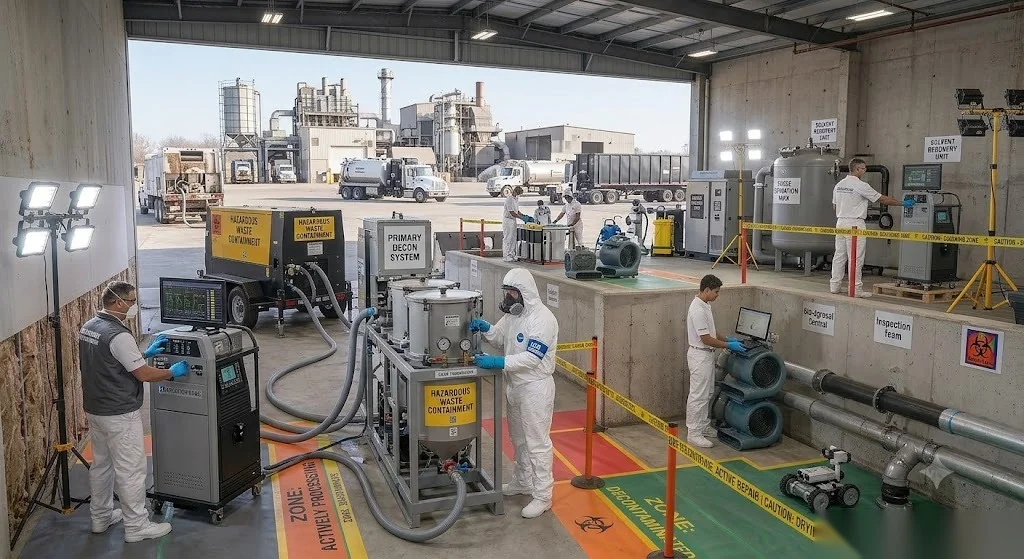
In most warehouse jobs, the highest-value concern isn't the building itself but the palletized inventory at risk. Extraction crews coordinate closely with facility managers to identify and relocate at-risk inventory before or during extraction, since water wicking up into the bottom layer of stacked pallets can happen fast. If you want to go deeper on this, our guide on Flooded Retail & Restaurant Extraction: Minimizing Business Downtime in Phoenix covers it well. We also break this down further in Water Damage in Phoenix High-Rise and Multi-Story Buildings.
Concrete Slab Extraction Considerations
Most industrial floors are sealed concrete, which extracts relatively quickly on the surface, but expansion joints and floor drains can hold water that continues seeping back onto the surface if not specifically addressed during extraction. For background from an independent source, see OSHA's workplace safety guidance. the IICRC S500 restoration standard has useful guidance on this if you want to read further.
Coordinating Around Operations
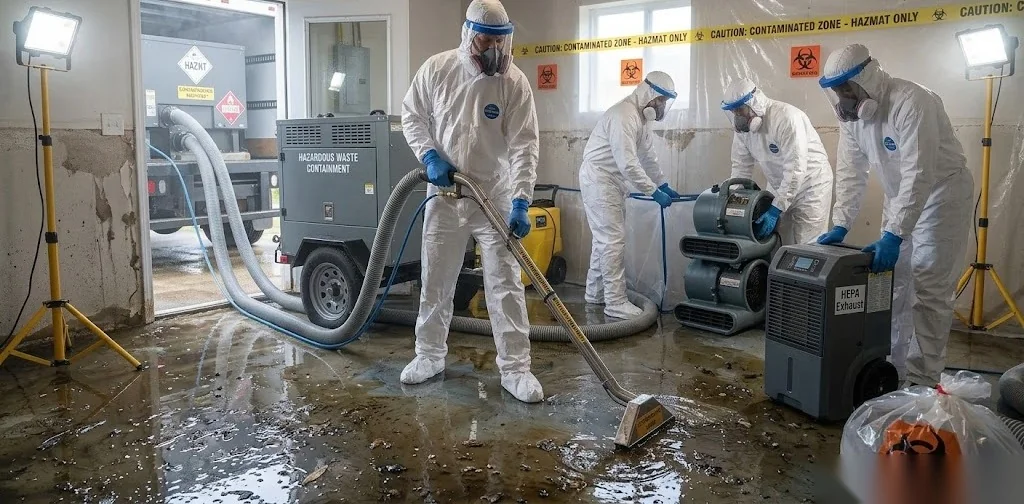
Large facilities often can't fully shut down during extraction, so crews work in zones — clearing and drying sections in sequence to allow partial operations to continue where it's safe to do so. You can also review the Insurance Information Institute's business claims overview for an outside perspective on this.