Crawl space water damage in Phoenix is insidious — developing slowly, staying hidden below the living space, and causing significant structural and biological damage before any visible sign appears above. Phoenix's desert climate makes moisture seem counterintuitive, but plumbing failures within the crawl space, condensation from HVAC duct leaks during monsoon humidity, and groundwater intrusion through foundations during intense storms all create moisture sources that an enclosed crawl space traps and concentrates.
Why Phoenix Crawl Spaces Get Wet
Crawl spaces exist in a meaningful portion of Phoenix residential construction — particularly older neighborhoods built before slab construction became standard, homes on sloped lots, and some historic properties. These spaces contain plumbing lines, HVAC ductwork, and electrical conduit, and they are typically inspected infrequently — creating conditions where developing moisture sources go undetected.
Primary moisture sources: plumbing supply and drain line failures within the crawl space (a slow drip from any connection accumulates in the enclosed space for extended periods), HVAC duct leaks discharging conditioned air that condenses on crawl space surfaces during humid monsoon conditions, and groundwater intrusion through foundation walls during sustained monsoon rainfall events. Phoenix's caliche hardpan, which concentrates surface runoff near foundations, pushes water toward foundation walls during intense storms.
Secondary indicators in the living space: flooring that feels soft or springy corresponding to crawl space framing below, musty odors stronger at floor level and near floor-level vents, unexplained water bill increases suggesting a supply line drip, or visible moisture through foundation vent openings. Any of these signs warrants immediate professional crawl space assessment. the IICRC S500 standard sets the procedural benchmark restoration companies are expected to follow.
Detection and Professional Assessment
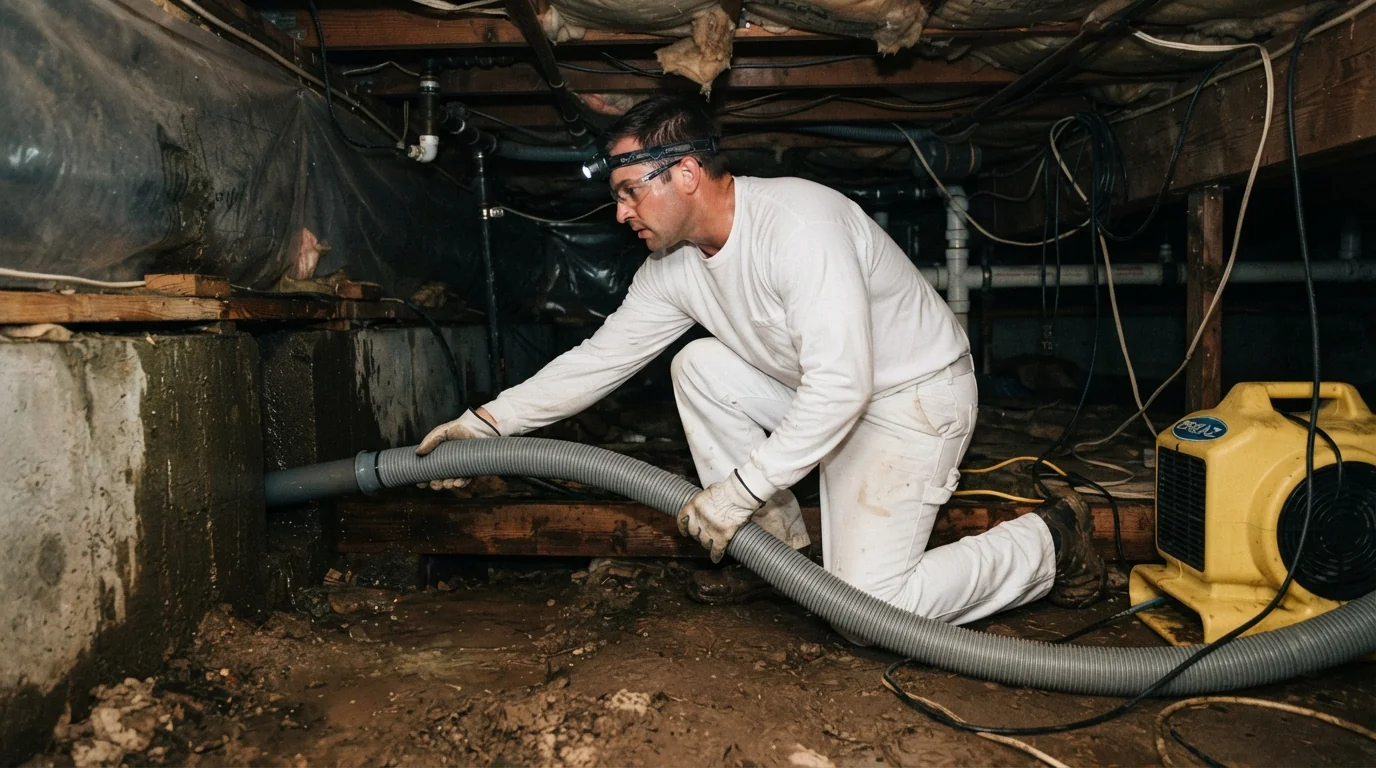
Annual crawl space entry with a flashlight and moisture meter is the most reliable detection method. Inspect for: visible water or staining on the vapor barrier or crawl space floor, staining on concrete walls indicating water intrusion, plumbing connections showing mineral deposits or corrosion, wood framing with darkening or soft spots, and any visible mold growth on wood surfaces.
Thermal imaging from the living space floor can reveal moisture anomalies in the sub-floor assembly without crawl space entry — cooler areas in floor thermal imaging correspond to wet or mold-affected framing below. For definitive professional assessment, restoration technicians equipped with moisture meters and crawl space cameras assess conditions without requiring full physical entry by the property owner.
Professional moisture assessment establishes baseline readings at multiple crawl space points: floor joists, sub-floor sheathing, rim joists at the foundation wall connection, and wood-to-concrete contacts. These readings determine the extent of elevated moisture and the required drying scope, and they document the condition for insurance claim purposes.
Restoration Process
Crawl space restoration begins with source elimination before any drying — continuing moisture source makes drying pointless. A licensed plumber addresses supply or drain line failures. the EPA provides background on how moisture control prevents mold growth in buildings.
Standing water is extracted with portable equipment suited to limited-clearance spaces. Wet vapor barrier is removed and replaced.
Daily moisture monitoring confirms drying progress in framing and sub-floor sheathing until all measurements reach target levels. After structural clearance, new vapor barrier is installed and insulation is replaced.
Encapsulation and Long-Term Prevention
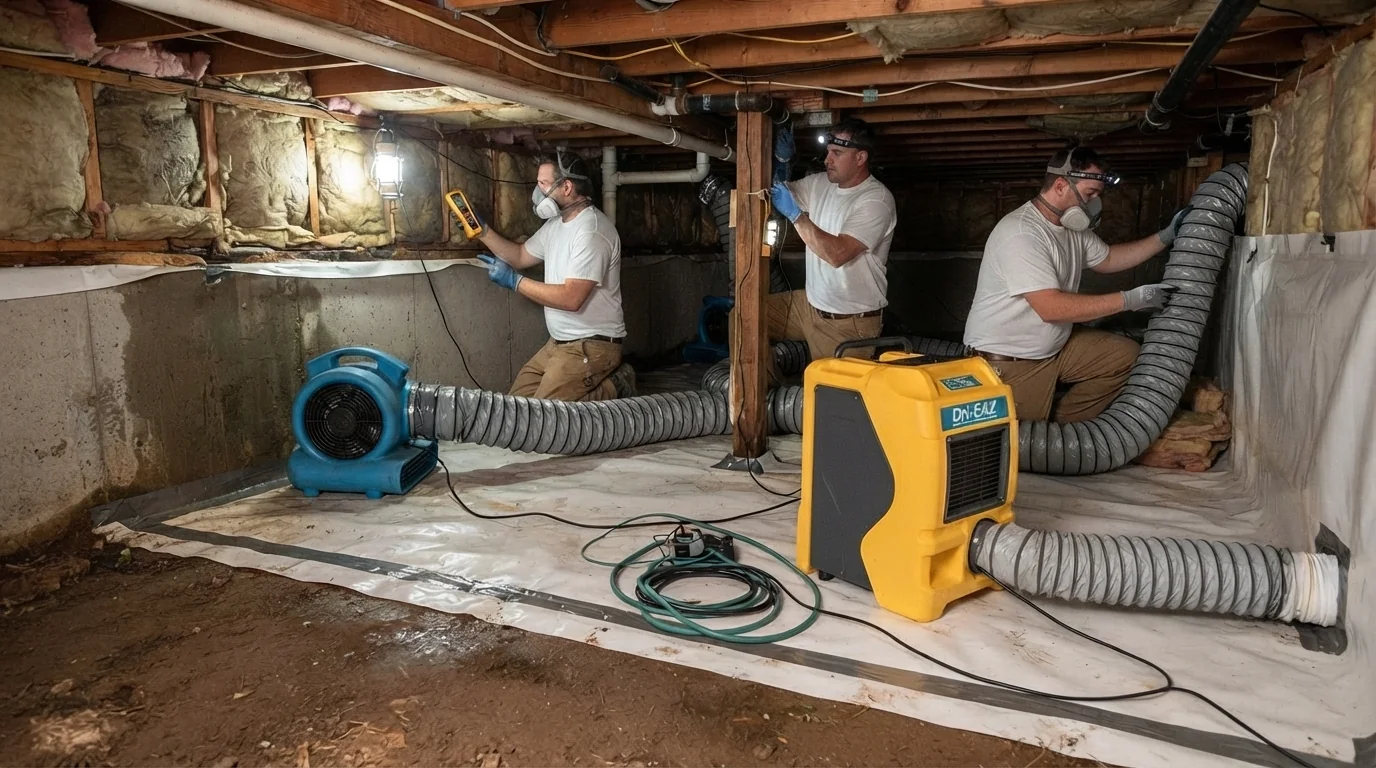
Crawl space encapsulation is the most effective long-term prevention for Phoenix properties with moisture-vulnerable crawl spaces. A full system includes heavy reinforced polyethylene liner covering the floor and extending up foundation walls, sealed seams at all overlaps and wall terminations, a dedicated crawl space dehumidifier, and sealed foundation vents transitioning from vented to conditioned crawl space. FEMA's National Flood Insurance Program explains how the National Flood Insurance Program covers flood losses.
Foundation drainage improvements address groundwater sources that encapsulation alone cannot prevent. In properties with documented groundwater intrusion history, a licensed civil engineer can assess the drainage situation and recommend appropriate measures.
Annual crawl space inspections — before and after monsoon season — are the maintenance practice that catches developing problems before they become significant events. Document each inspection with photographs.