When people picture structural drying, they usually picture fans. What they don't picture is the containment work that happens first — the plastic sheeting, the isolated zones, the sealed doorways that turn an open floor plan into a controlled drying environment.
What a Drying Chamber Actually Is
A drying chamber is a defined, semi-sealed space where temperature, humidity, and airflow can be managed as a single system rather than left to drift with the rest of the house. Containment barriers — usually 6-mil plastic sheeting taped to framing or flooring — separate the affected area from unaffected rooms so drying equipment isn't wasting capacity conditioning air in spaces that were never wet. Read more about our team and certifications if you want to know who will be showing up at your door.
Why Containment Comes Before Equipment
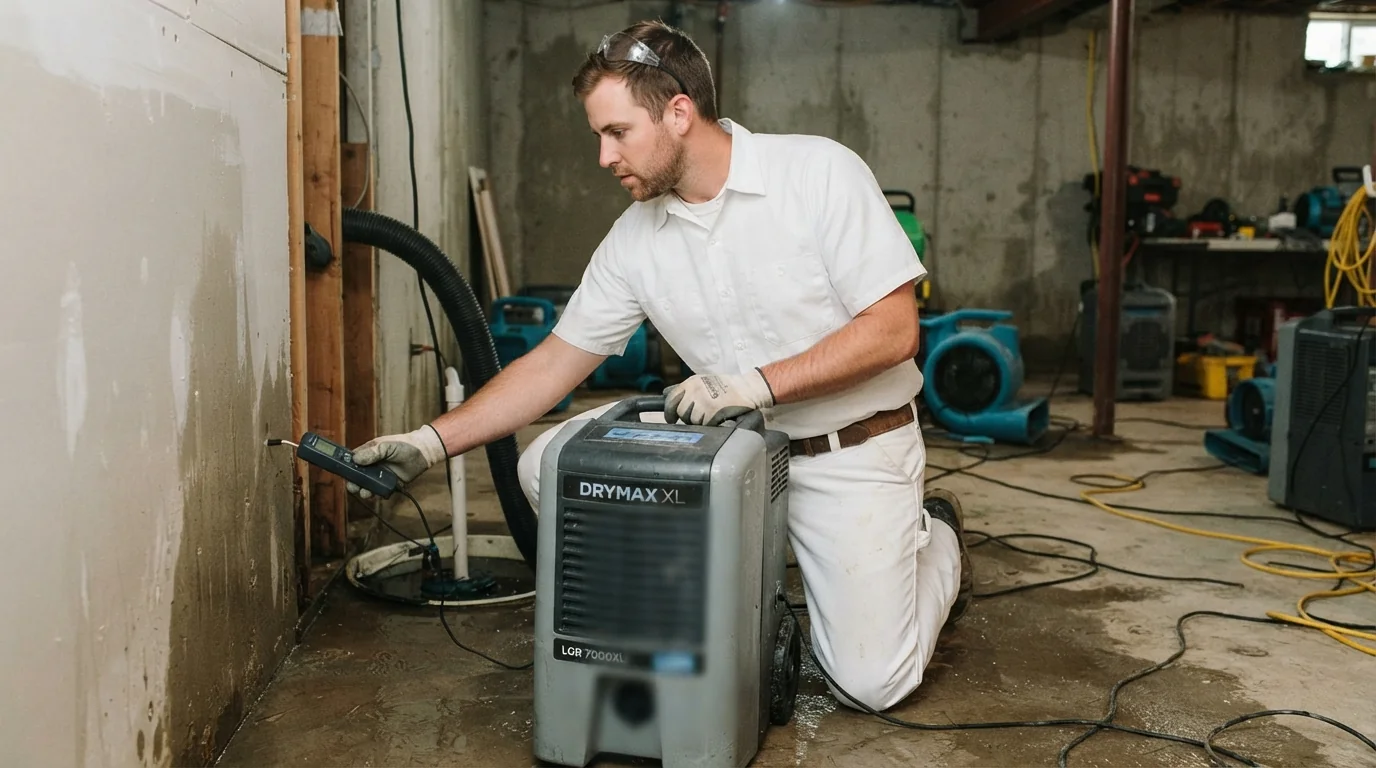
Air movers and dehumidifiers are sized to a specific cubic footage. Set them up in an open, unsealed area and the effective volume of air they're working against balloons far beyond the calculation, which means the same equipment that would dry a contained 400-square-foot chamber in three days can take twice as long in an open one. Psychrometric calculations assume containment is in place — skip it and the math stops working. For background from an independent source, see the IICRC S500 restoration standard.
Isolating HVAC During the Drying Process
A running central air system pulls conditioned air through return vents that may sit inside the drying chamber, undermining the humidity control the equipment is trying to establish. Technicians typically seal supply and return registers within the containment zone with plastic and tape, and manage temperature and humidity independently with the drying equipment itself rather than the home's HVAC. the EPA's moisture control guidance has useful guidance on this if you want to read further.
Negative Air Pressure and Odor Control
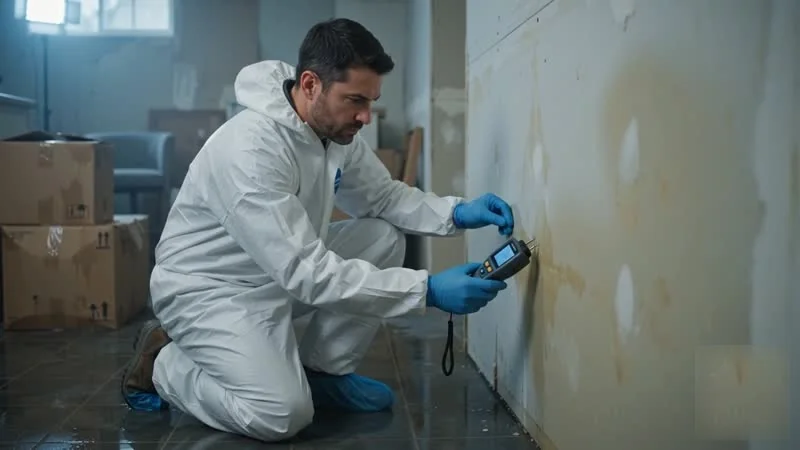
In cases involving sewage backup or mold-prone materials, technicians often add a negative air machine that vents the chamber's air outside the home through ducting, rather than recirculating it. This keeps airborne contaminants and odors from migrating into unaffected living space while the drying program runs. You can also review the Department of Energy's ventilation and humidity guidance for an outside perspective on this.
What to Expect When Your Home Has a Drying Chamber
Expect some rooms to be sealed off with plastic sheeting and tape, a background hum from air movers and dehumidifiers, and a warmer, more humid feel right at the containment barrier where equipment is working hardest. This is normal and expected — it's also exactly why professional structural drying outperforms open-window, DIY approaches.