Why Dishwasher Leaks Often Go Unnoticed Initially
Dishwashers are built into cabinetry, which means a slow leak from a worn door gasket, a cracked supply line, or a failed drain hose can go undetected for days or weeks, slowly saturating the surrounding cabinet base and flooring before it becomes visible. By the time a leak is discovered — often as a soft spot in the floor or a warped cabinet base — the water has frequently spread further than the immediate area around the appliance. If a situation like this is happening right now, you can request emergency service and we'll get moving. It's worth browsing our full list of restoration services to see which one matches what you're dealing with.
Immediate Steps After Discovering a Dishwasher Leak
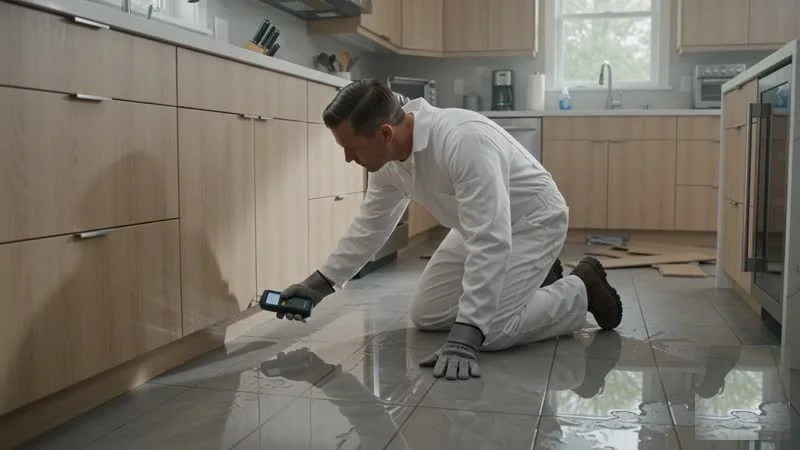
Shut off the water supply to the dishwasher, typically located under the sink, and unplug or shut off power to the unit before doing anything further. If the leak has been ongoing for a while, avoid running the dishwasher again until both the appliance and the surrounding water damage have been assessed. If you want to go deeper on this, our guide on Kitchen Water Damage in Phoenix: A Complete Response Guide covers it well.
Assessing the Extent of the Damage
Because a dishwasher sits directly on the kitchen floor, water from a leak often travels beneath adjacent cabinets and flooring before it's visible, which is why a moisture assessment typically extends beyond the dishwasher's immediate footprint to check surrounding cabinet bases and flooring, not just the appliance area itself. We also break this down further in Bathroom Water Damage in Phoenix: Causes, Restoration, and Prevention. For background from an independent source, see the Consumer Product Safety Commission's appliance safety resources.
See our related guide on appliance leak water damage for more on how this type of damage is generally assessed. the IICRC S500 restoration standard has useful guidance on this if you want to read further.
Repairing the Kitchen After Extraction and Drying
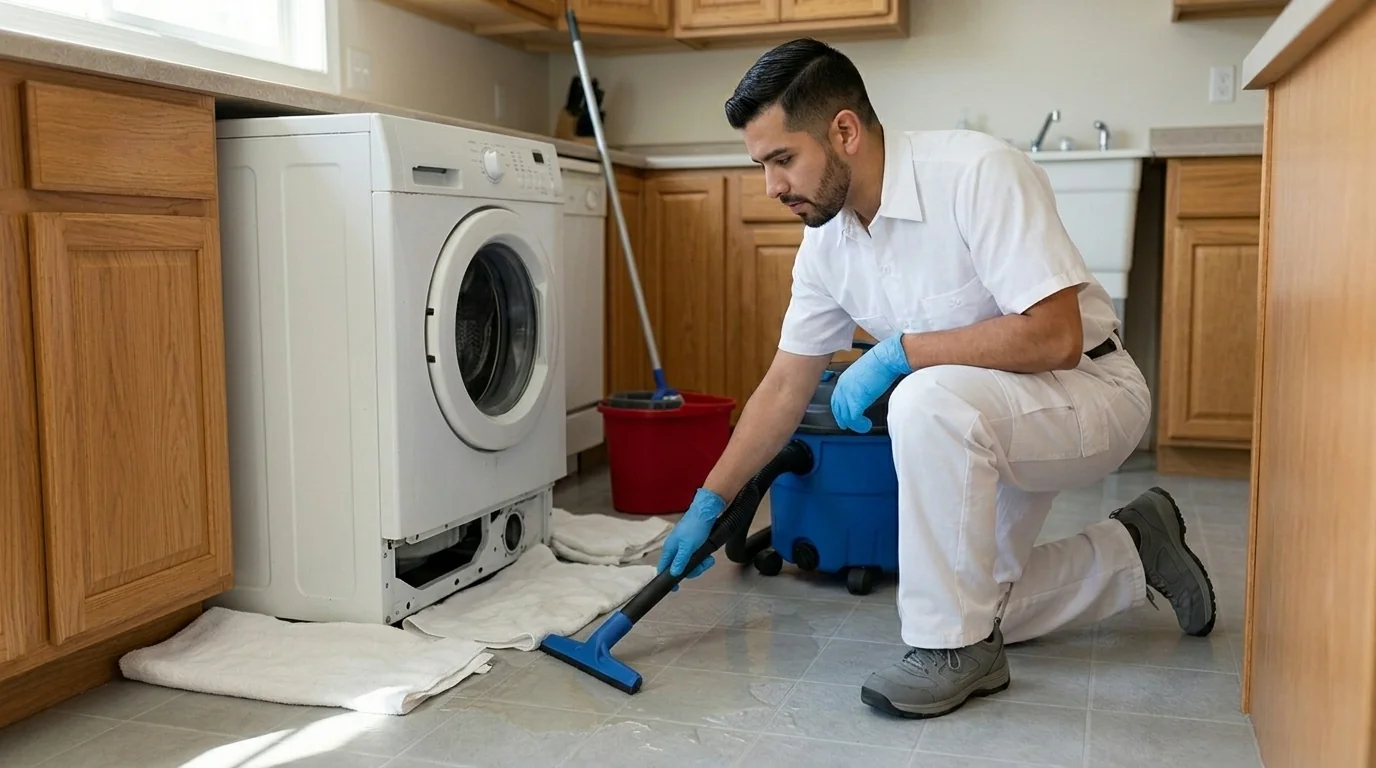
Once the affected flooring and cabinet base are dried or removed and replaced as needed, the dishwasher itself should be repaired or replaced by a qualified technician before being reconnected, to prevent a repeat leak. Reconstruction of the kitchen floor and any affected cabinetry typically follows once the underlying moisture issue has been fully resolved. You can also review the EPA's mold prevention guidance for an outside perspective on this.