Why So Few Phoenix Homes Have Basements
Phoenix's expansive clay soil and high water table in some areas make basement construction less common and more expensive than in much of the country, so most flooding calls involve slab-on-grade homes rather than true basements. When a below-grade space does flood — a rare basement, a sunken den, or a below-grade garage — it behaves more like a bathtub than a typical room, since water has nowhere to drain. If cost is on your mind, how our pricing works breaks down what typically drives the number up or down. We've answered a lot of related questions on answers to common questions.
Water Has Nowhere to Go But Up
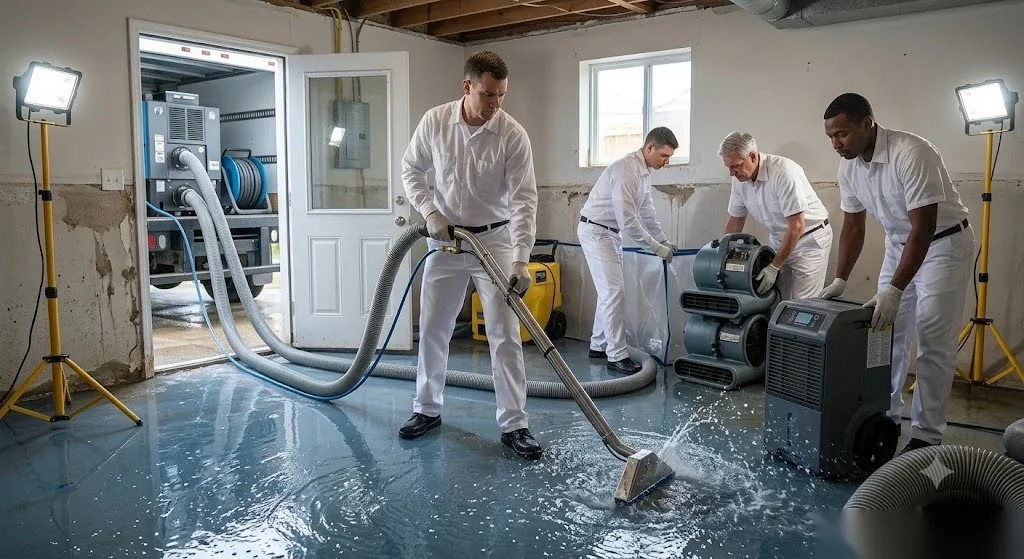
Without a walkout or drain, water in a below-grade space simply rises until it's extracted mechanically. That means submersible pumps often come into play before standard truck-mount extraction, especially if flooding is several inches deep or more. If you want to go deeper on this, our guide on Crawl Space Water Damage in Phoenix: Detection, Drying, and Prevention covers it well.
Concrete Walls Trap Moisture Longer
Below-grade concrete walls absorb and hold moisture longer than framed walls upstairs, which extends drying time even after visible water is gone. Slab and masonry drying in these spaces often needs specialized moisture meters calibrated for dense materials rather than the standard pin meters used on drywall. For background from an independent source, see FEMA's National Flood Insurance Program. the EPA's guidance on mold and moisture has useful guidance on this if you want to read further.
Mold Risk in an Uncommon Space
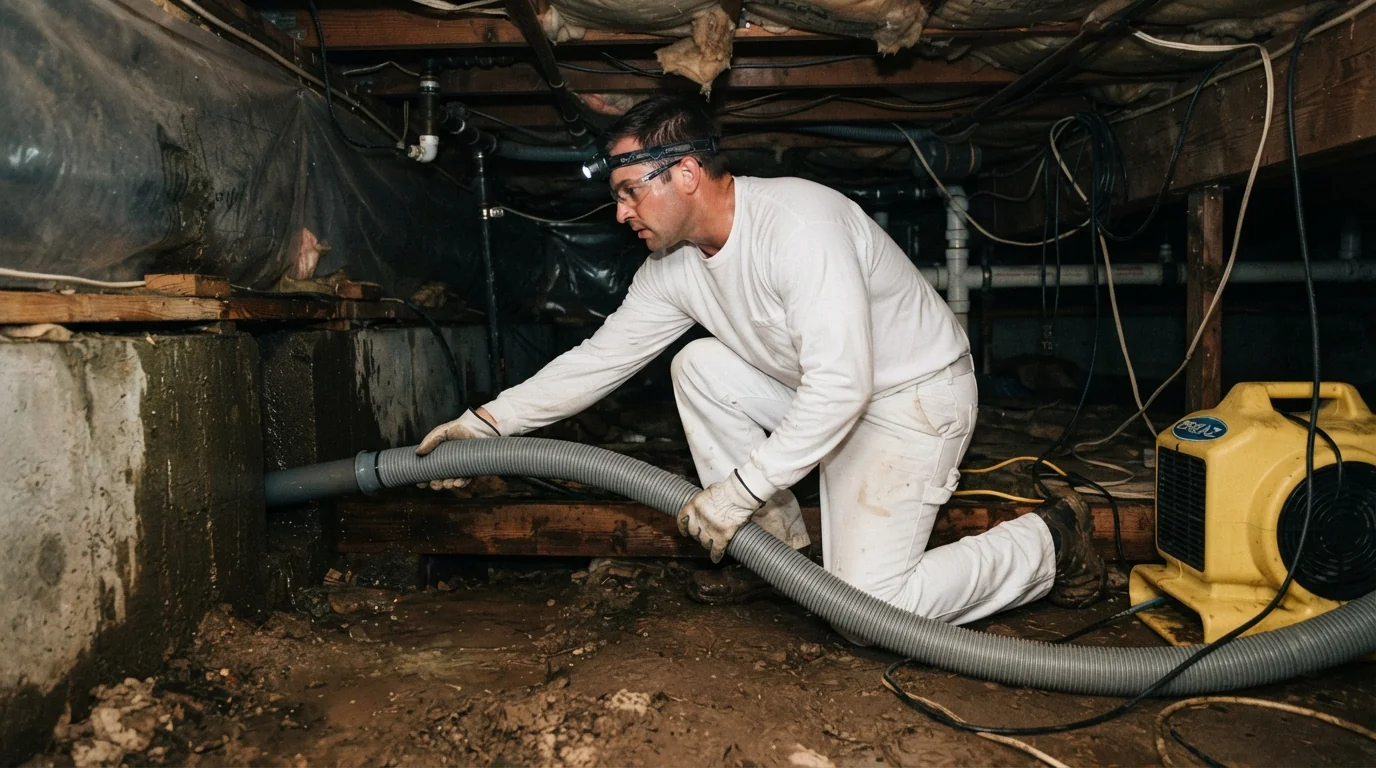
Because below-grade flooding is rare here, homeowners are often less prepared for it than in basement-heavy climates, and mold can take hold before anyone recognizes the smell as a problem rather than normal below-grade mustiness. If a below-grade space has flooded, professional moisture mapping is worth the cost even if the space looks dry to the eye. You can also review the Red Cross flood safety guidance for an outside perspective on this.