Why Kitchen Cabinets Are Especially Vulnerable
Kitchen cabinets sit directly at floor level around sinks, dishwashers, and refrigerator water lines — the most common sources of kitchen water damage — which means they're often the first material affected and among the most saturated by the time a leak is discovered. Most Phoenix kitchen cabinets are built from particleboard or MDF with a laminate or wood veneer finish, materials that swell and delaminate once they absorb water and generally do not return to their original shape once dry. Read more about our team and certifications if you want to know who will be showing up at your door. If a situation like this is happening right now, you can request emergency service and we'll get moving.
Assessing Which Cabinets Can Be Saved
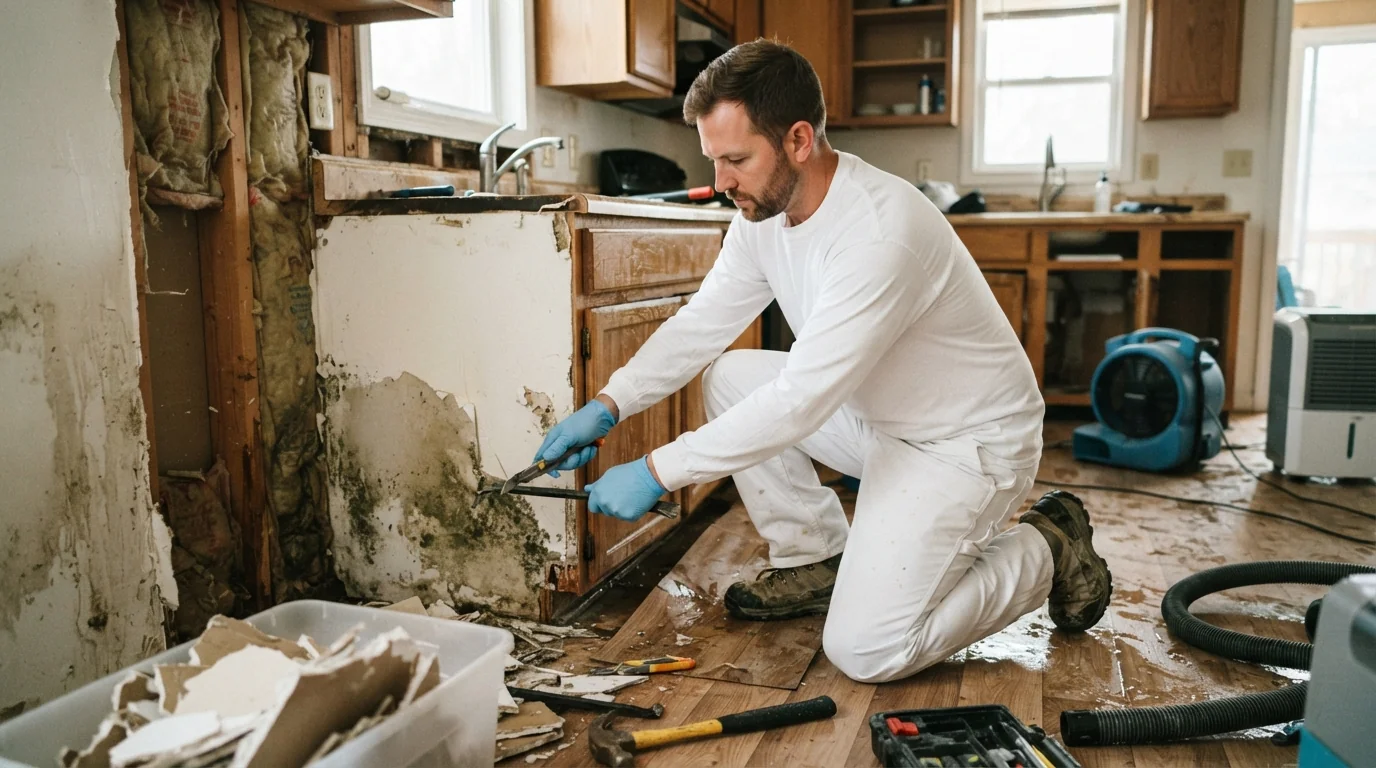
Solid wood cabinet boxes have a better chance of surviving minor water exposure with drying and refinishing than particleboard construction, though even solid wood cabinets can be compromised by extended saturation. Technicians check the base of each cabinet — the toe kick and lower few inches — since this is where water damage concentrates, checking for swelling, softness, or delamination that indicates the material needs replacement. If you want to go deeper on this, our guide on Appliance Leaks and Water Damage: The Most Preventable Phoenix Home Disasters covers it well. We also break this down further in Toilet Leak Detection: The Silent Water Waster in Phoenix Homes.
Full Replacement vs. Partial Repair
In many kitchen water damage repair cases, only the lower cabinets directly in the flood path need replacement, while upper cabinets remain untouched. When cabinets need replacement, matching the existing style and finish is often possible for common cabinet lines, though older or discontinued styles may require a broader approach to keep the kitchen's appearance consistent. For a related situation, see our post on Kitchen Water Damage Repair After a Dishwasher Leak. For background from an independent source, see the Consumer Product Safety Commission's appliance safety resources.
Addressing What's Behind and Beneath the Cabinets
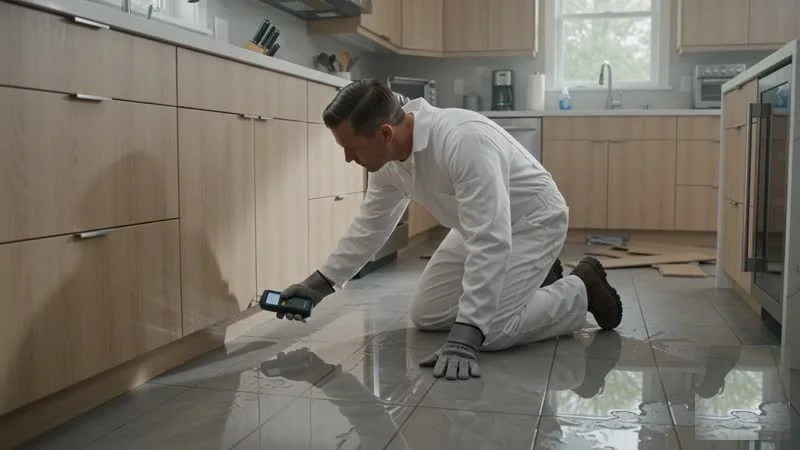
Once damaged cabinets are removed, the subfloor and wall space behind them needs the same moisture assessment as any other part of the kitchen, since cabinets can trap water against these surfaces and mask ongoing damage that isn't visible until the cabinet is pulled away. the IICRC S500 restoration standard has useful guidance on this if you want to read further. You can also review the EPA's mold prevention guidance for an outside perspective on this.